

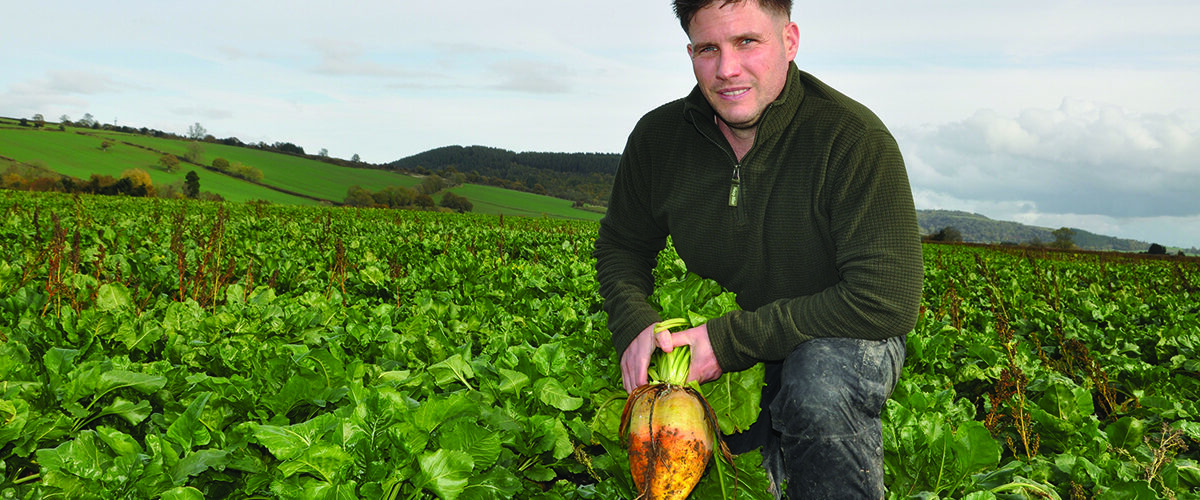
Seed suppliers report increased interest in fodder beet this spring following a difficult forage season last year.
Fodder beet is appealing to farmers looking to ensure adequate supplies in the event of a repeat summer drought. Once fodder beet gets its roots down, it can be quite drought tolerant, says ProCam agronomist Nick Duggan.
“Although inputs can be quite high, fodder beet does offer a big crop of energy,” he says, “There’s also the flexibility to feed fodder beet to sheep, beef or dairy, and to lift or graze it, although it’s important to ‘wean’ livestock onto it gradually, especially cattle, because its high energy content can cause acidosis.”
ProCam has been evaluating the performance of fodder beet varieties over multiple seasons, with on-farm trials conducted in the North and West of the country as well as other locations country wide.
Yields
Fodder beet can yield as much as 20 tonnes of dry matter per hectare compared to stubble turnips yielding about 4-6t DM/ha. And, at around 12.5ME, the energy content of its roots is similar to grass.
But farmers must farmers grow the right varieties for their situation.
“We test a range of varieties,” says Mr Duggan. “These range from low DM beets for grazing, to high energy types for lifting and chopping for livestock, or for use in anaerobic digestion (AD) plants.
Procam typically tests about 20 or so varieties annually in replicated trial plots, with 4-5 new varieties included each year. Many of the established varieties have been in the trial for maybe six years, so new varieties can be robustly benchmarked.
Assessments begin with variety emergence and vigour, and conclude at harvest by measuring yields, says Nick, with beets lifted and tops and roots weighed separately. Yields per hectare are then calculated, corrected for %DM.
“Also at harvest, each variety is assessed for disease resilience, and for the amount of root protruding above the soil. More root protruding is helpful if grazing. If lifting beet, you want more root in the ground for protection from frost. Agronomically, we encourage all farmers to keep the tops as healthy as possible with a summer nutrition programme. As well as helping to protect roots from frost, a healthy canopy helps sustain the crop into winter.”
Primed seed
In addition to evaluating varieties, ProCam also evaluates the performance of primed seed – available with certain fodder beet varieties. Pre-germinated for faster emergence, it tends to produce more uniform plants at the cotyledon stage.
“Faster establishment, in turn, helps with weed suppression, and once fodder beet reaches 12 leaves, it becomes more tolerant to virus yellows.
“Plus, primed seed can deliver higher yields. Results can vary, but in five years of trials on the variety Geronimo we saw a yield uplift of approximately 1.5t DM/ha from Active Boost primed seed compared with conventional seed.”