

An innovative project to reduce emissions from livestock farming is yielding promising results, say researchers.
Scientists from Aberystwyth University are working with Pilgrim’s Europe to eliminate the UK’s dependence on applied nitrogen fertilisers in grassland by using three specially developed legume species.
On-farm trials
Funded by Defra and Innovate UK, the Nitrogen Utilisation Efficiency of Legumes (NUE-Leg) project project combines scientific research with on-farm trials and knowledge transfer among farmers and food industry leaders.
Christina Marley, who leads the Agricultural Systems Research Group at Aberystwyth University, is trialling red clover, hybrid white clover and Birdsfoot Trefoil to address specific challenges in sustainable grassland management.
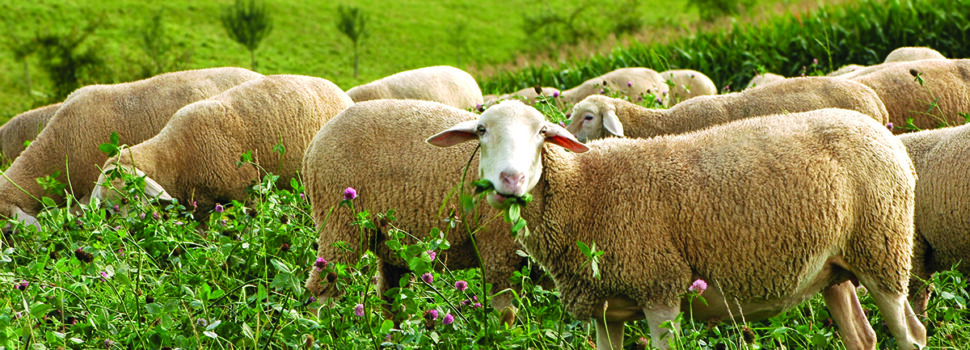
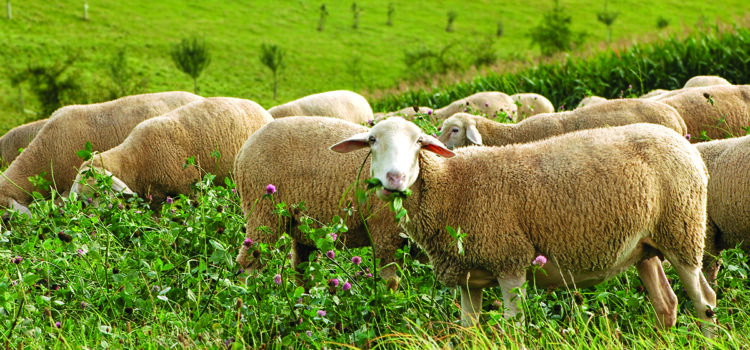
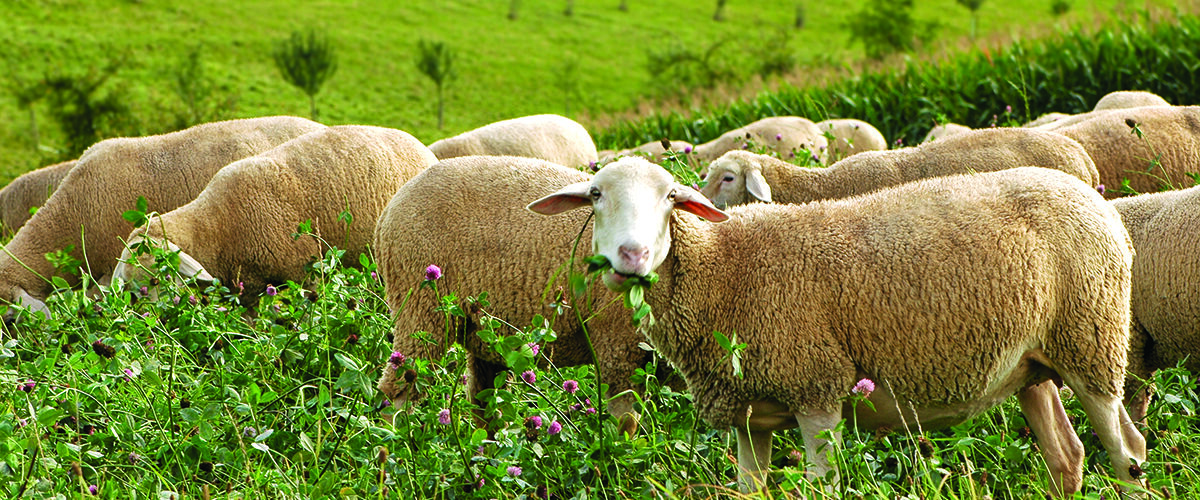
A specific objective of the project is to enable farms to use clover and fix up to 300kg of nitrogen per hectare per year. The project includes testing clover varieties in real farm conditions to identify the best performers.
Daniel Owen, lamb supply chain development manager at Pilgrim’s Europe, said: “The aim of this trial is to reduce inorganic nitrogen requirements while boosting productivity and cutting on-farm emissions.”
Early results
Results so far are promising. “Our ultimate ambition is to enhance business productivity and profitability, while strengthening sustainability credentials and supporting producers in meeting their future environmental commitments.”
Dafydd Parry Jones, organic beef and sheep farmer at Maesllwyni, a trial farm who has supplied Pilgrim’s Europe lamb for over 20 years, said: “Being part of the NUE-Leg project has been a real eye-opener.
“It’s not just about trials in a field – it’s about finding solutions that work for farmers day-to-day, helping us build more resilient, productive systems that are better for the environment too.”
Pilgrim’s Europe is also helping to breed more efficient maternal sheep with a naturally lower carbon footprint. It believes this will help to reduce agricultural emissions, enhance soil health and build resilience across its UK supply chain.