

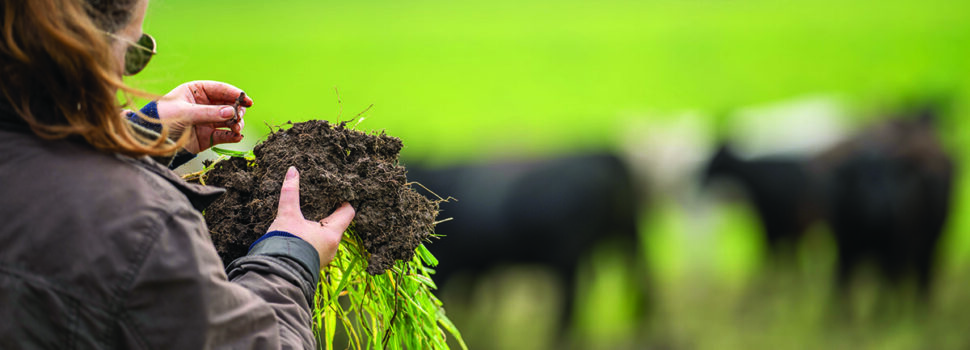

A renewed focus on soil health will help UK farmers secure a more resilient future in the face of global challenges, says the government.
Healthy soils sit at the centre of the Defra’s vision for the future of English farming, with ministers arguing they are essential to maintaining profitable food production while reducing reliance on costly inputs.
“Healthy soils, clean water and functioning ecosystems are the foundations of food production,” says the government’s long-awaited Farming Roadmap, which was published this summer. The foreword to the document, co-written by farm minister Stephen Morgan, says healthier soils improve nutrient efficiency, reduce exposure to volatile fertiliser markets and help farms withstand drought, flooding and disease. “The ongoing pressure on fertiliser and fuel prices because of the closure of the Strait of Hormuz underlines the need to shift to a more resilient farming system with reduced reliance on such inputs.”
Rather than treating environmental improvement as separate from commercial farming, the roadmap presents soil health as a business asset that underpins productivity, resilience and profitability. The roadmap says nature-friendly farming systems can maintain or enhance production by improving soil health, increasing nutrient efficiency and reducing dependence on external inputs.
Environmental benefits
The long-term goal is for farming to work with the environment. Better soil management is expected to reduce pollution, strengthen water retention and improve resilience to increasingly unpredictable weather, it adds.
By 2050, soils should contain more organic matter, retain more water and support stronger crop and grass growth, creating more resilient farming businesses alongside improved environmental outcomes. The roadmap backs this ambition with commitments to publish new soil structure guidance, establish an open-access national soil data portal and create a national soil monitoring baseline. The document also includes an Environmental Improvement Plan target to bring at least 40% of England’s agricultural soils into sustainable management by 2028, rising to 60% by 2030.
Responding to the announcement, Soil Association policy director Brendan Costelloe said the roadmap rightly recognised that soils were the best defence for farmers who would increasingly face extreme weather over the coming decades. “Extra investment in innovation for soil health and water management is much welcome – but government must ensure this is spent on nature-friendly practices to help soils retain water at times of flood and drought.”