

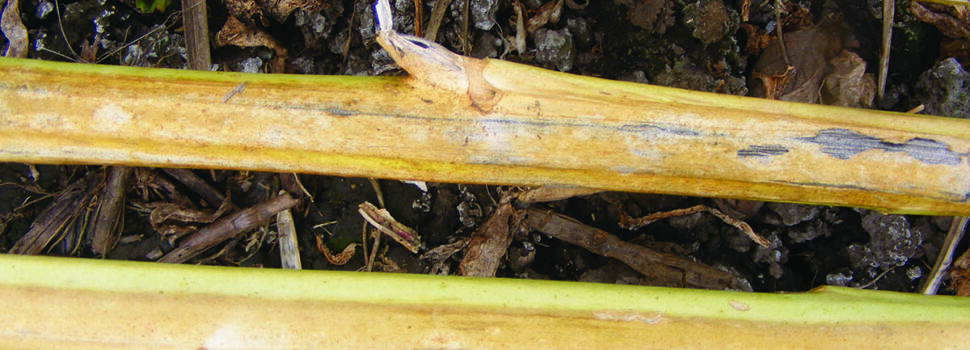
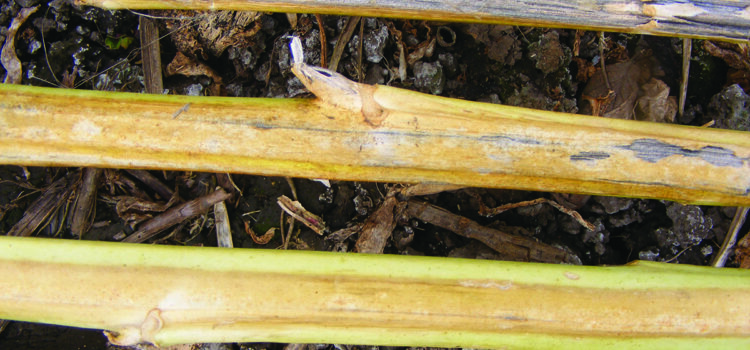
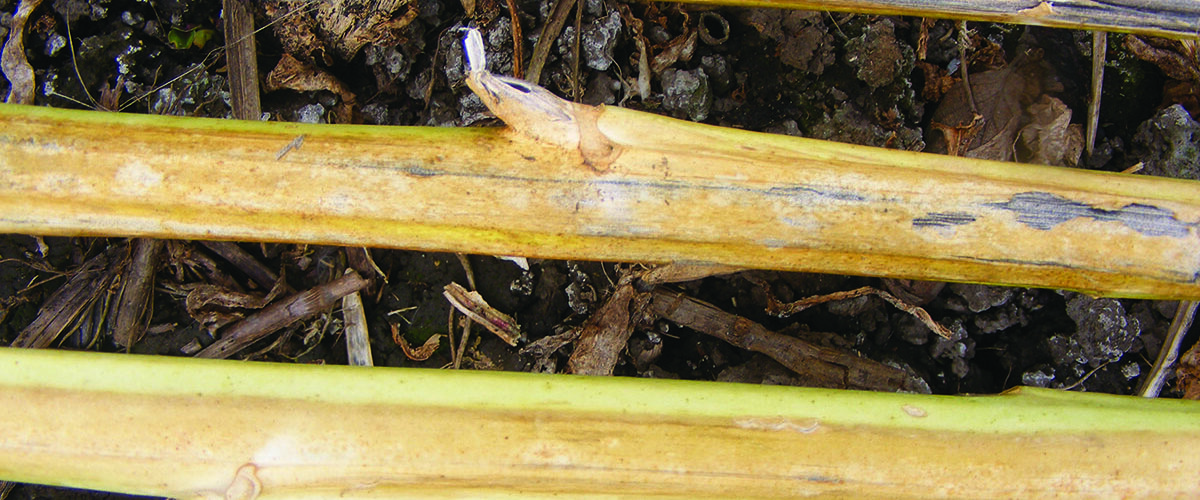
Growers facing increasing pressure from verticillium stripe should consider resistant rape varieties in the absence of chemical control.
The disease can survive in the soil for up to 10 years and, in severe cases, reduce yields by as much as 34%. Industry specialists say variety choice, combined with good crop establishment and longer rotations, remains the only practical way to limit its impact. The AHDB is in its third year of assessing verticillium stripe resistance. Rather than using the traditional one-to-nine disease scale, varieties are classified as moderately resistant, intermediate or susceptible.
More widespread
Grainseed general manager Neil Groom sats the disease remains patchy but is becoming more widespread. “In extreme conditions Verticillium stripe can cause up to 34% yield reduction,” he adds.
The fungus infects plants from the soil during autumn and spreads through the vascular system before symptoms become visible in spring and early summer. As infected crops mature, the pathogen returns to the soil, allowing the disease cycle to continue.
“Because the microsclerotia can survive in the soil for 10 years, the rotation theoretically should be 10 years. But this strategy is impractical and unworkable, so growers who have experienced the problem now have resistant varieties to fall back on.”
There are no curative treatments once the crop is established. “There is no other option of minimising verticillium other than growing a resistant variety, optimising establishment and extending your rotation.” Independent plant breeder Mike Pickford says conventional variety Pi Pinnacle has shown strong field performance, remaining clean in trials while maintaining green stems that continue contributing to yield through grain fill.