

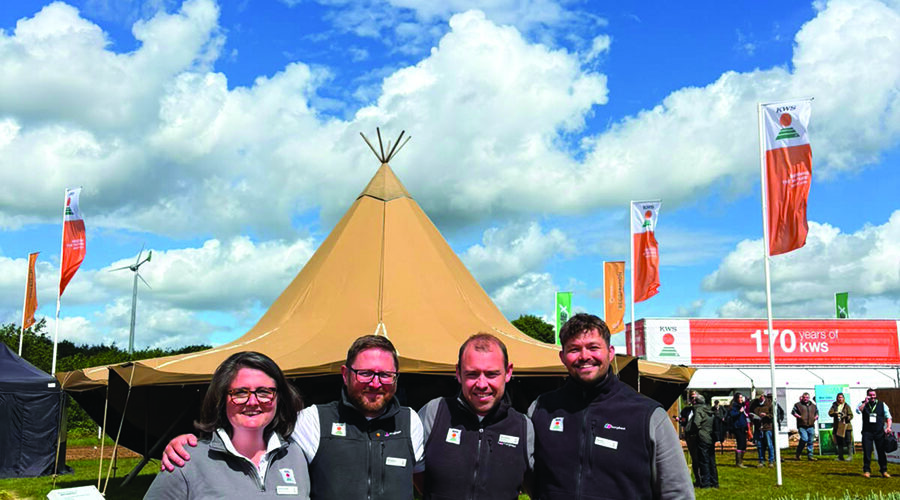
 Arable growers can improve resilience and manage risk more effectively by making greater use of crop and variety choice, says plant breeder KWS.
Advances in plant breeding are giving farmers access to stronger genetics and a broader range of cropping options at a time when tight margins and volatile markets are placing greater pressure on farm businesses.
The message comes as growers face a mix of high input costs, uncertain commodity markets and increasingly variable weather. Crop diversity can help farm businesses improve consistency and maintain profitability, says KWS.
Strategic choices
Cereal farmers now have more tools available to manage business risk than ever before, said KWS head of product management Kate Cobbold at last month’s Cereals event.
“Despite the pressures facing the industry, there are genuine reasons for optimism. Growers today have access to some of the strongest genetics we’ve ever seen, alongside a broader range of cropping options and routes to market. The progress made through plant breeding over the past decade has been significant. Higher yields remain important, but genetic gain is also delivering improvements in disease resistance, input-use efficiency and overall crop resilience.”
Crop selection should be viewed as a strategic business decision rather than simply a production choice, said Ms Cobbold. “The businesses best placed to succeed will be those that take advantage of the diversity of options available to them and consider productivity not just in terms of headline yield, but also in terms of consistency, resilience and overall system performance.”
Rotation value
While wheat remains the cornerstone of most arable enterprises, KWS believes more diverse rotations can help spread risk and create additional opportunities. The company itself reinvests 20% of its turnover in research and development.
Oilseed rape remains one example. Following several difficult seasons, the crop has shown renewed promise where growing conditions have been favourable.
Rory Hannam, KWS product manager for oats, oilseed rape, peas and rye, said: “After several difficult seasons, last year reminded many growers of the value oilseed rape can bring to a rotation when conditions are right. Continued breeding progress, including new hybrid material such as KWS Domingos, is helping maintain confidence in the crop and OSR has the potential to be a stand-out crop on farm again this year.”
Other crops are also providing opportunities. Hybrid barley variety Inys continues to attract interest from growers seeking alternatives within the rotation.
Market flexibility
Maize is also gaining attention because it can serve several markets, including forage, grain, anaerobic digestion and contract-growing agreements.
KWS agroservice manager Matt Bull said resilience came from building flexibility into the farming system. “There’s no single answer to the pressures growers face and resilience comes from having options and using them effectively. Rotations need to deliver against multiple objectives, from managing disease and workload to supporting cashflow and market opportunities.”
Improved genetics provide the foundation for managing those challenges, which is why KWS continues to invest across a wide range of crops rather than focusing solely on wheat, said Mr Bull