

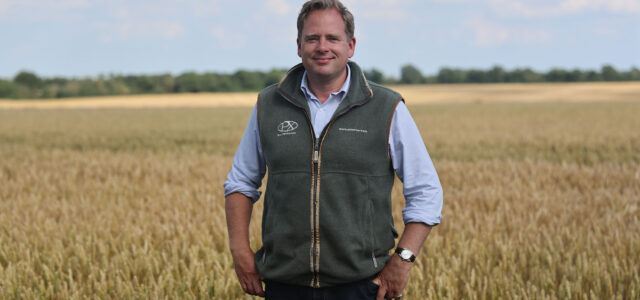
With almost 100,000 tonnes of grain storage capacity, cleanliness and biosecurity top the agenda at PX Farms in Cambridgeshire.

Grain storage cleanliness is a key driver for success at PX Farms – which grows and manages some 5000ha (12,500 acres) of arable crops in eastern England.
Founded in 2003 by James Peck when he took on his family farm, PX Farms is now a large business employing 32 full-time staff farming multiple units across Cambridge, Lincolnshire and Hertfordshire.
“We’re an agri-business managing arable land and grain storage for other landowners, but we also specialise in haulage and lettings too,” says Mr Peck, who is managing director.
The farm has steadily grown into an extensive arable business enterprise over the last two decades– but it very much retains the friendly feel of a family farm at its heart.
“When I took on the family farm, there were approximately 300ha of owned land and 60ha of contracted land,” explains Mr Peck. “We’ve increased the amount of land we own considerably in the last 20 plus years or so and diversified the business in multiple ways.”
Highest standards
With the capacity to store large amounts of grain, PX Farms works closely with both individuals and merchants to commercially grow, store and clean grain.
Mr Peck says adequate grain shed protection is crucial to maintaining the highest standards of grain quality.
In the early days, the business focused solely on storing its own crops, but even then, challenges quickly became apparent.
“Back when I first started out, we had some issues with insects in older buildings, so we soon learned how much hardship grain pests can cause,” explains Mr Peck.
“That experience made us very aware of the importance of thorough shed preparation ahead of harvest.
“Now, we make sure all sheds are cleaned out properly and any potential risks are addressed before new grain comes in.”
He says he’s learned from experience that older buildings with poor ventilation, and those which have previously had issues with insects, are more prone to problems.
Harvest preparation
Mr Peck compares good grain storage protection to taking out insurance on your buildings.
“It’s no different from paying for insurance to make sure your shed doesn’t burn down – it’s a preventative measure put in place to protect your crops from damage and it gives you peace of mind,” he says.
For protection against grain insects, PX Farms has been using the grain storage protectant K-Obiol EC25 since the early 2000s for its cleaning and preparation process.
“We’ve been using K-Obiol for many years and it now forms an integral part of our grain storage preparation protocol,” says Mr Peck.
“All our cleaning is done by a specialist team in-house who have all the kit to carry it out.”
He says adequate cleaning is a really important part of pre-harvest preparation and can have a big influence on the success of the harvest.
“Once sheds are empty, we thoroughly wash them down and then apply the product to the entire fabric of the building,” explains Mr Peck.
“It’s really important that this job is done thoroughly, because grain pests can hide in the cracks and crevices of buildings, so making sure the product’s everywhere is key to its effectiveness.”
Grain protection
At PX Farms protecting the grain as it arrives in the stores is just as important as protecting the stores themselves.
“Grain protection requires a combination of measures and not one measure alone will be the solution,” says Mr Peck.
“We’d previously used a well-known broad-spectrum insecticide but following its ban in the 2000s, we had to look for an alternative solution for a grain protectant to complement the other work we were doing to keep grain insect-free.”
While protecting sheds with K-Obiol EC25 offers a great defence barrier to damage-causing grain insects, Mr Peck says all incoming grain is also treated with K-Obiol ULV6.
“This is applied to crops going into store as a precautionary measure – we want to provide a solution to a problem which hasn’t yet occurred,” he explains.
PX Farms has a strong reputation for grain storage which it is keen to uphold, so taking a belt and braces approach makes sense.
“We’ve invested a lot of time and money into protecting grain from damage caused by insects, and it’s absolutely paid off,” adds Mr Peck.
Farm Facts
Farming 12,500 acres across Cambridgeshire, Bedfordshire/Hertfordshire and Lincolnshire
32 full-time staff split across three sites, with an additional 19 staff during peak periods such as harvest
Capacity at Scotland Farm in Cambridgeshire to store nearly 100,000 tonnes of grain
12 different crop storage compartments with the ability to store between 8,000 and 25,000 tonnes of crops
Running a fleet of 12 haulage lorries
Accredited laboratory on-site at the Cambridgeshire farm
On-site Grain Hospital removes high levels of admixture and contamination to improve the crop quality
Support harvest success with good preparation
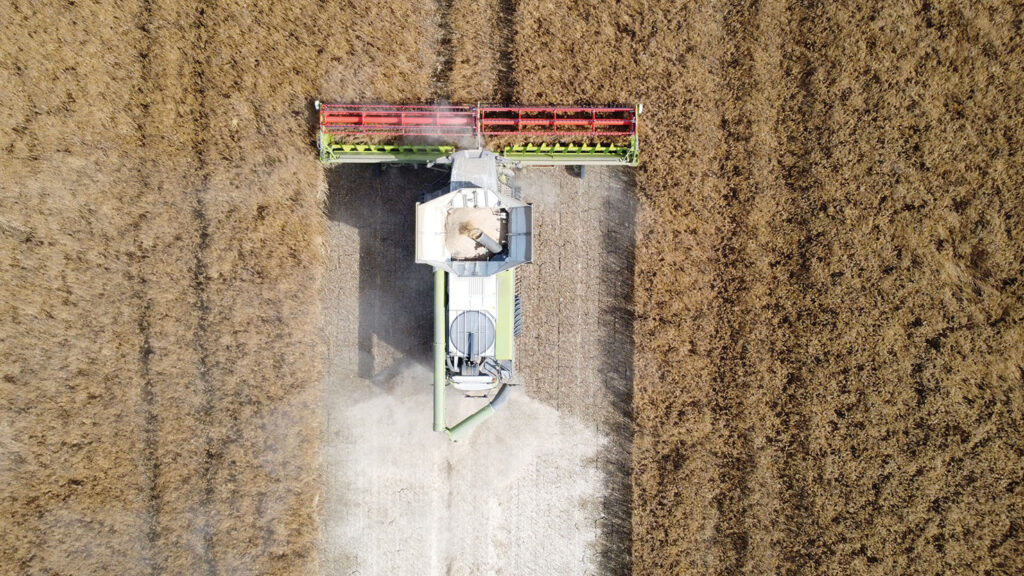
As harvest 2025 edges closer, farmers are being reminded of the importance of prioritising grain store hygiene to prevent costly insect damage.
Ken Black, account manager at Envu, says thorough preparation of grain stores is more important than ever because milder winters no longer naturally suppressing pest populations, .
“Even with a good growing season, poor storage preparation can lead to losses comparable to pests and diseases in the field,” he explains.
Mr Black recommends grain stores are cleaned out six to eight weeks ahead of harvest, with attention paid to hidden areas like roof spaces, underfloor ducts, conveyors, and handling equipment.
“After thorough cleaning has taken place, monitoring traps should be used to check for insect activity,” he says.
“If grain pests, such as the grain weevil or saw-toothed grain beetle, are detected, an appropriate chemical treatment should be applied to all surfaces until wet, allowing time for it to take full effect.”
Aadopting a proactive approach to grain storage hygiene can safeguard grain quality and avoid the risk of infestations once new grain is moved into store, says Mr Black.



Crushed farmer urges rethink on farm safety
News Oct 1, 2026

Drought could last another six months
News Sep 28, 2026

Veteran paddlers launch £10,000 YANA challenge
News Aug 27, 2026


Poignant hi-vis reminder on farm safety
News Jul 31, 2026
