

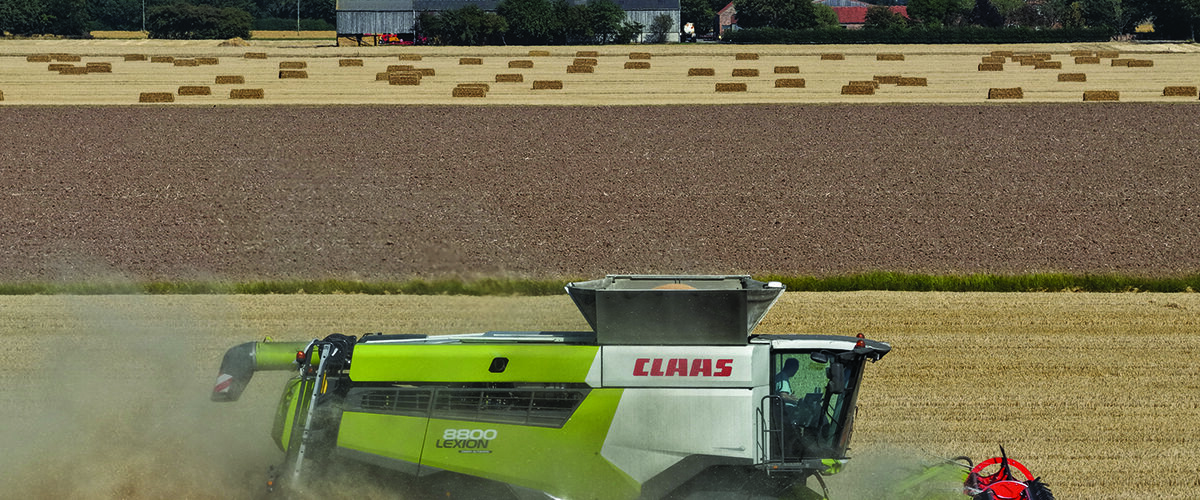
England’s wheat harvest was 17% lower than the 10-year average – despite an increased area, according to provisional Defra estimates.
Output for England is provisionally estimated at 10.6 Mt, up 5% on the year. But the increase is largely due to a 9% increase in cropped area – and it production was still well below the ten-year average of 12.9 Mt.
Regionally, the strongest wheat output remains in East Anglia (3 Mt) and the East Midlands (2 Mt). Yields nationally averaged 7.0t/ha, a slight drop from 7.2t/ha last year and the lowest since 2020 (6.9t/ha).
“Growers faced an extremely challenging season, with a wet autumn followed by a dry spring and summer, making crop management particularly tricky,” said AHDB cereals analyst Gabriel Odiase.
UK picture
Taking the UK as a whole, the AHDB estimates wheat output reached 11.8 Mt – an increase of 6.2% compared to 2024. But this figure is 8% below the five-year average (2020-2024).
Regionally, the north did better than the south. North-east England saw a 35% year-on-year increase in wheat output largely due to an increase in cropped area. Yorkshire saw output increase of 16% and Scotland saw a production rise by 23%.
Barley
Defra estimates a sharp fall in England’s barley production compared with last year. Total output stands at 4.2 Mt – some 14% lower than in 2024 and 19% below the ten-year average – marking the smallest English barley harvest since 2012.
England’s winter barley output slipped 2% to 2.0 Mt, as a smaller cropped area outweighed higher yields. Spring barley production dropped 23% to 2.2 Mt after poorer yields across most regions, some 18% below its ten-year average.
Oats and rape
Defra figures suggest a 2% drop in the English oat harvest 755,000t. This is above the ten-year average of 720,000t. Yields dropped across most areas, with only northern England recording an increase in production.
Oilseed rape bucked the downward trend, with a 29% yield increase driving a 5.5% increase in output to 722,000t. This is 17% above the five-year average albeit well below the ten-year average of 1.4 Mt due to a much smaller cropped area.