


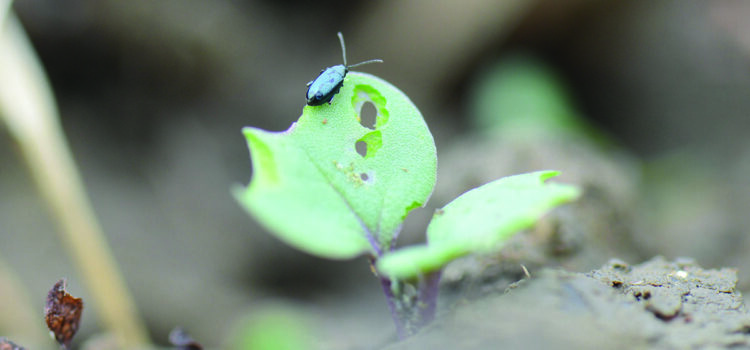
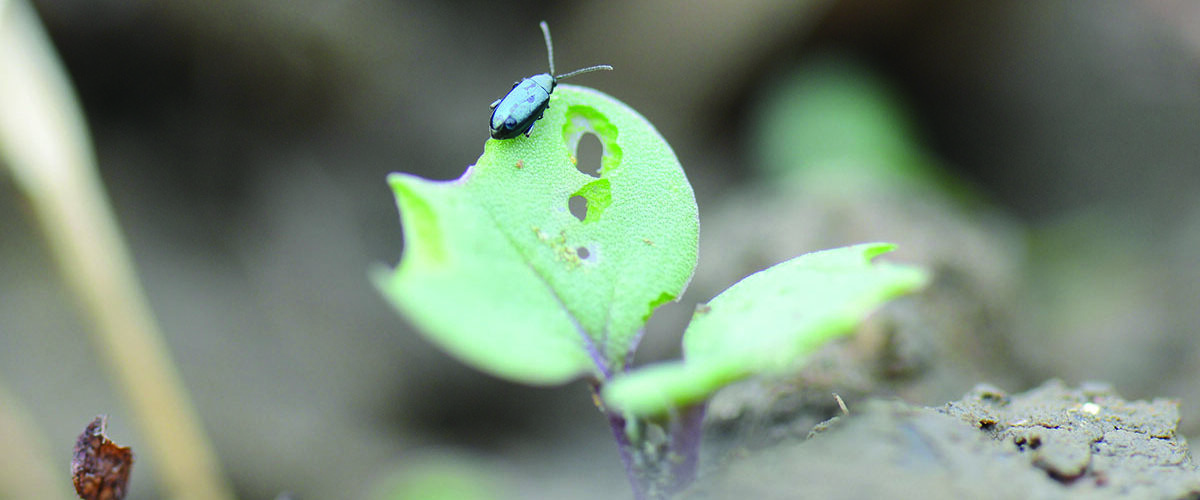
Cultivating oilseed rape stubble after harvest benefits the following crop and helps to reduce pest pressure – including Cabbage Stem Flea Beetles (CSFB).
The cross-industry OSR Reboot initiative pinpoints 10 techniques that can help. Updated for this autumn, they are a key example of Integrated Pest Management in action – delivering multiple blows to suppress flea beetle population. The first strategy growers can apply is to cultivate rape stubble after the combine has finished. After harvest, growers are advised to shallow cultivate rape stubble to reduce emerging CSFB adults and pupae in the soil.
Correct depth
After harvest, CSFB adults are in the top 30 mm of soil and can still emerge. New data confirms that shallow cultivations of oilseed rape stubble reduce beetle numbers by between 50% and 80%. Topsoil should be cultivated and then inspected make sure it is precise enough. There may be a need to adjust the machinery – for example to adjust the tracking of the forward and backwards discs, so they track correctly between each other.
You do not need to cultivate any deeper than is necessary. Stirring up the soil after harvest could have negative effects on beneficial insects and may limit the potential the use of rape volunteers. When sowing the next year’s rape crop, try to employ some key strategies. The first is to choose where the next crop can be sown, thinking about this in both time and space and in conjunction with your neighbour.
Care needed
Be careful with rotations – decide whether one year in five is right – and consider the proximity of previous rape crops. Consider using “brassica buddies” by planting turnip rape or volunteer rape around the borders or within the field. These brassica buddies in borders or infield strips are there to lure the beetle away from the crop. These sacrificial strips of brassicas can be left until late September. They reduce the pressure of both adult and larvae.
Peak migration of CSFB takes place end of August to beginning of September so avoid sowing crops then. Soil should be moist. Sow early to avoid adults or sow late after peak migration. This can reduce adult damage and larval loading. When sowing rape for the 2027 harvest, growers should use as many techniques as they can to avoid increasing CSFB populations. In this way they are employing IPM. Each individual strategy needs to be implemented with good attention to detail.
Every grower knows that establishing an arable crop carefully with precision brings about positive benefits in the long run. Colin Peters is a break crop specialist at NIAB. For more details about the OSR Reboot campaign, visit unitedoilseeds.co.uk/osr-reboot