

Potato industry leaders say the sector will struggle to reverse falling domestic production unless the government makes water a strategic priority for farming.
Unreliable access to water is now the biggest barrier to expanding domestic production, delegates were told at the Potato Industry Growth Summit in London. Growers are prepared to invest – but policy is falling behind. The UK is increasingly dependent on imported potatoes. Defra estimates UK demand reached 7.1 million tonnes in 2025, but British growers supplied only 71% of that requirement – compared to 90% of national demand at the turn of the century.
Delegates at the London summit said reversing that decline depends on giving farmers confidence to invest in reservoirs, irrigation systems and wider water infrastructure.
Water resilience
The summit, organised by GB Potatoes and the National Potato Innovation Centre, took place between the second and third heatwaves of the year. Water dominated discussions. Recent weather patterns have exposed the scale of the challenge. Britain has experienced droughts in 2018, 2022 and 2025. This year’s spring and summer rainfall has also been well below average across much of England.
At the same time, the winter of 2025/26 was among the wettest on record, while wet springs in 2023 and 2024 delayed planting and disrupted crop establishment. Delegates said growers now face longer dry periods followed by more intense rainfall. That means more water needs to be captured when it is available and stored until crops need irrigation. Potatoes are especially vulnerable to moisture stress during tuber initiation and bulking. Inadequate or inconsistent irrigation reduces yields, limits tuber size and increases quality defects. The result is fewer marketable potatoes.
A potato crop requires about 350mm of water during the growing season, equivalent to around 1.4 million litres per acre. That requirement is met through rainfall, stored soil moisture and irrigation. The summit called for long-term planning involving government, regulators, water companies and agriculture. Delegates also backed faster planning decisions for farm reservoirs, policies allowing growers to store surplus winter water, continued investment in irrigation efficiency and research into drought and flood-tolerant varieties.
Investment confidence
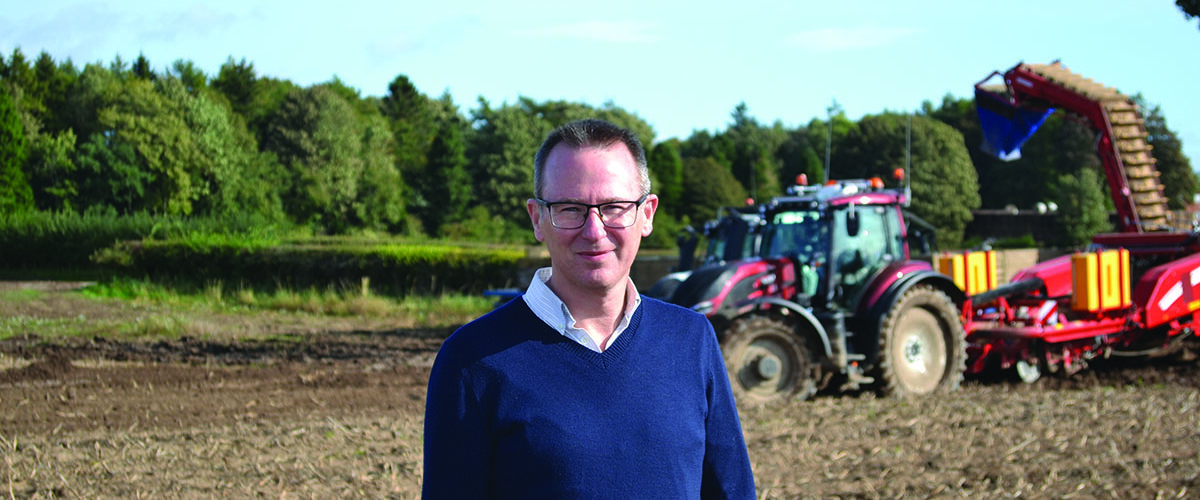
GB Potatoes chief executive Scott Walker said growers were prepared to invest if government created the right policy framework.
“Water is not an optional extra for potato production. It is fundamental to maintaining the crop we grow today and absolutely essential if we want to increase British production in the future.
Without reliable access to water, the UK would see further reductions in domestic production, greater volatility for growers and processors, and increasing reliance on imports, said Mr Walker.
“That would weaken our food security and export jobs and investment from the British supply chain,” he added. “Growers are prepared to invest in reservoirs, irrigation technology and more efficient water-management systems, but they need a policy and planning framework that gives them the confidence to do so. We experience periods when there is too much water and periods when there is far too little. The answer is to enable growers to capture water when it is available and store it until crops need it. If government is serious about economic growth, food security and increasing domestic food production, then water for agriculture must be recognised as strategic national infrastructure.”
Wider benefits
Delegates said investment in farm reservoirs would also ease pressure on public water supplies, improve flood management and strengthen catchment resilience as demand increases from housing, population growth and climate change.
The summit brought together representatives from across the supply chain, including growers, breeders, processors, packers, retailers, foodservice businesses and researchers. Speakers agreed that demand for potatoes remains strong, with British growers capable of increasing production.
Other discussions focused on boosting potato consumption, safeguarding plant health, improving profitability, encouraging innovation and attracting skilled people into the industry.