

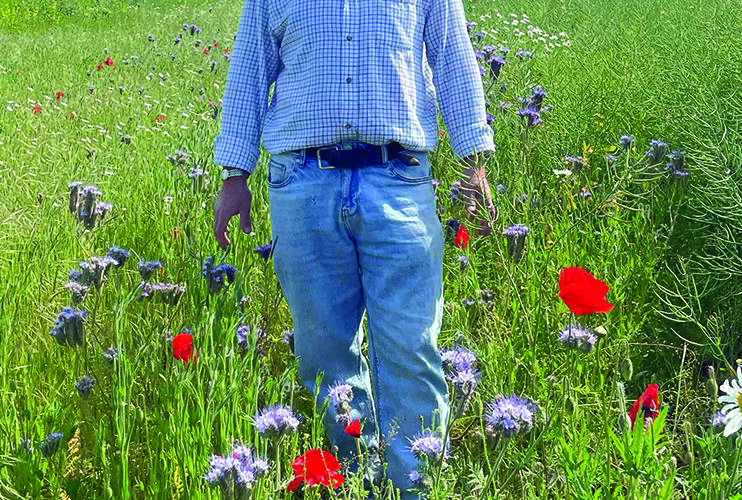
 Lincolnshire low-tillage farmer Colin Chappell scooped third place in this year’s Soil Farmer of the Year Award.
Mr Chappell – whose transition to reduced tillage and cover cropping has improved soil health, improved water infiltration and reduced flood risk without compromising output – received the award at last month’s Groundswell festival. The competition demonstrates how better soil management can strengthen farm resilience, improve profitability and help farm businesses adapt to increasingly challenging weather conditions.
Second place went to Devon farmer Paul Baker, who combines plant tissue analysis with cover cropping, mob grazing and reduced cultivation, to reduce diesel by around 75% while maintaining crop performance.
Farming systems
First place was awarded to Lancashire vegetable grower Chris Molyneux. He uses legume-rich cover crops, strip tillage and controlled traffic farming to improve soil structure, drainage and biological activity. Although representing very different farming systems, all three winners demonstrated how investing in soil health can reduce costs, improve resilience and create more profitable businesses over the long term.
The competition is organised by Innovation for Agriculture and the Farm Carbon Toolkit, alongside sponsors Cotswold Seeds and Hutchinsons. Judges said all finalists demonstrated an extraordinary level of dedication to managing soil health.
Farmers attending the ceremony heard directly from the winners about the practical changes they have made to improve soil health and the impact those changes have had on their businesses:
“Year-on-year we meet farmers through this competition who are thinking outside the box and trying new ways to improve soil structure, build organic matter and enhance microbial activity,” said Becky Willson, of the Farm Carbon Toolkit. “What’s particularly encouraging is that these changes aren’t just improving soil health, but also reducing costs, increasing resilience and helping businesses cope with increasingly unpredictable weather.”
Over the coming year, each winner will host a farm walk, giving other farmers the opportunity to see their systems in practice and discuss both the successes and challenges of implementing change.