

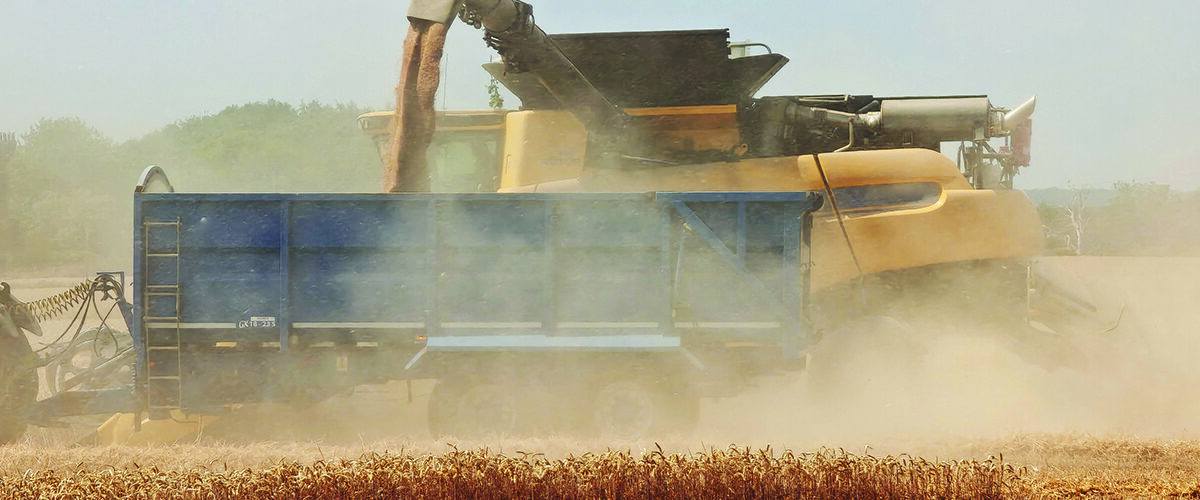
Britain is heading for one of its worst harvests on record after drought and repeated heatwaves cut cereal yields and potentially wiped hundreds of millions of pounds from farm revenues.
The Energy and Climate Intelligence Unit (ECIU) estimates that this year’s cereals and oilseeds crop could lose up to 2.5m tonnes compared with forecasts made before the summer. The resulting revenue loss could reach £390m. Latest AHDB figures reinforce the scale of the downturn. Wheat yields are averaging 6.7t/ha, against 7.9t/ha over the past 10 years. Spring barley is averaging just 4.1t/ha, compared with 5.7t/ha.
Yield pressure
Wheat harvesting has moved unusually quickly because of the dry weather. Some 85% had been cut by 10 August, making it the fastest wheat harvest for more than 20 years. But performance varies sharply. Individual wheat yields reported to AHDB range from 3.9t/ha to 11.5t/ha, reflecting differences in soil type, drilling date, organic fertiliser use, cropping history and variety.
Oilseed rape is the exception. Average yields stand at 3.9t/ha, above the 10-year average of 3.3t/ha. The ECIU estimates total cereals and oilseeds production could fall to about 19.5m tonnes. If realised, that would put 2026 below the previous record low in 2020. Earlier spring forecasts suggested production of between 21.4m and 22m tonnes.
Business risk
Cambridgeshire farmer Martin Lines said crops had looked promising coming out of spring before drought and heat damaged yield prospects. “I’ve never known it this dry and hot on our farm,” he said.
High input costs are compounding the problem as growers begin making cropping decisions for next season. As autumn approaches, the immediate concern is shifting from harvest performance to working capital.
Three successive difficult harvests risk weakening farm balance sheets just as businesses need to buy seed, fertiliser and other inputs for next year. ECIU analyst Tom Lancaster warned that repeated weather extremes were undermining farmers’ ability to establish subsequent crops. AHDB figures show the impact is not uniform. Winter barley is averaging 6.8t/ha, close to its 10-year average of 6.9t/ha, while oats have fallen to 4.2t/ha against 5.4t/ha.