

Independent trials suggest organo-mineral fertiliser could increase grain yields and improve soil biology without changing farm operations.
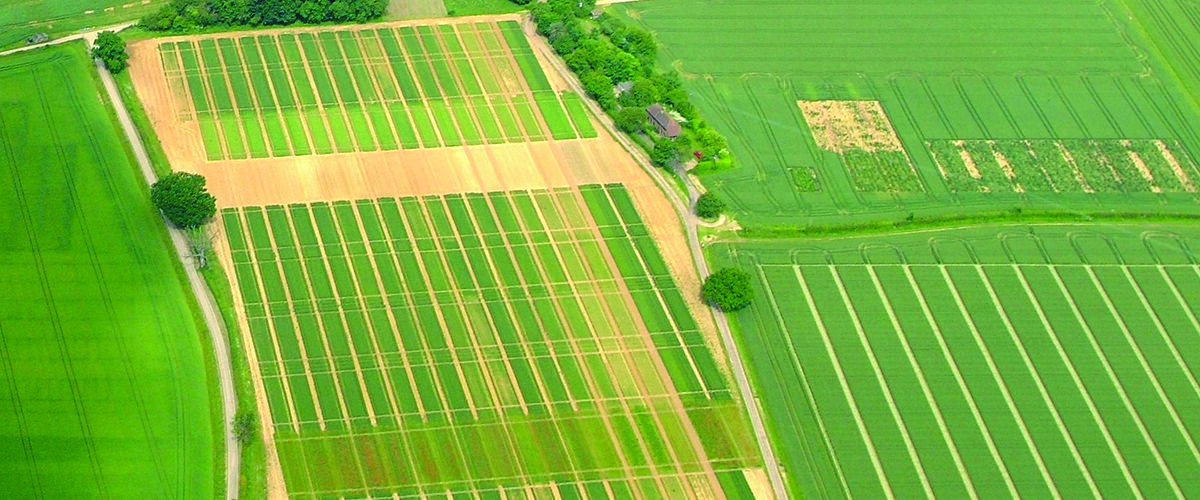
An organo-mineral fertiliser developed by SoilWorx has delivered a 27.7% increase in spring barley yields compared with standard mineral nitrogen in independent trials at Rothamsted Research.
The trial yielded of 9t/ha using the organo-mineral fertiliser compared with 7.05t/ha from conventional mineral nitrogen at the same rate of 160kg N/ha. At current prices, the difference equates to an extral £205/ha in gross output.
The results come amid increasing pressure from volatile input costs, tighter margins and increasingly extreme weather patterns. Alternative nutrients are seen as one way to improve crop resilience while reducing dependence on synthetic fertiliser.
Significance
SoilWorx sales director Paul O’Hora says the significance of the trials lies in the consistency of performance across contrasting seasons. “It’s really important for farmers to know that we’ve now got two bookends in a cropping cycle,” he says.
“We’re not getting a typical year anymore. We’re getting extremes of weather, and it’s possible that very dry springs may actually be the future. So it’s important that we’ve been able to show in two seasons that it works regardless of conditions.”
The Rothamsted work followed earlier trials in Suffolk and Devon. The organo-mineral fertiliser tested carried an NPK analysis of 10-4-4 and closely reflected SoilWorx’s commercial Agrii-Fortis OMF range developed with Agrii.
The first year took place during a notably wet season, raising suggestions that the advantage may simply have reflected mineral nitrogen leaching from the soil. A much drier spring in 2025 challenged that theory.
Observations
Pre-harvest field observations showed the organo-mineral plots remained visibly greener and under less moisture stress. “It’s proof that if you get the soil foundation right, you’ll see it in the crop,” says Dr O’Hora.
The commercial implications are straightforward, he adds. The organo-mineral fertiliser delivered higher output without requiring additional field operations or changes to crop management. The fertiliser was applied as a standard top dressing in two passes, mirroring conventional mineral nitrogen programmes. “All we did was replace the fertiliser – like for like. You can put it out in the same spreader at the same timings.”
Using AHDB April 2026 grain prices, SoilWorx calculates the barley crop generated £939/ha in gross income compared with £734/ha from conventional mineral nitrogen.
The trials also suggest growers could choose between pursuing higher yields or reducing fertiliser inputs while maintaining output.
“Either take the additional yield and the associated revenue, or apply the findings to reduce fertiliser input and cut costs,” says Dr O’Hora. “Either route, points in the same financial direction.”
The trials also recorded a 272% increase in microbial biomass following a single application. Dr O’Hora says this may prove equally significant over the longer term because it points towards improved nutrient cycling and stronger soil function.
“Once you start getting that root rhizosphere area working together harmoniously, that’s where you start to see the exchange of nutrients, cycling, nitrogen fixation,” he says.
The fertiliser operates as a hybrid system, combining immediately available mineral nutrition with an organic component that mineralises more slowly through the season. That phased nutrient release is emerging as a possible explanation for the yield uplift. As the mineral fraction declines, nutrients continue to become available rather than leaving crops reliant on diminishing soil reserves.
The trials have also prompted discussion around root development and crop resilience. Where synthetic fertiliser provides abundant nutrition immediately, there is evidence suggesting crops may have less incentive to extend rooting systems deeply into the soil profile.
Validation
By contrast, Dr O’Hora believes the hybrid nutrient model encourages stronger interaction between roots and soil microbes, potentially improving resilience during periods of stress.
Year three of the Rothamsted trials is already underway and will introduce comparisons between the organo-mineral product and standard organic fertiliser systems. The company is also extending trials into winter wheat, potatoes and grassland.
The importance of the Rothamsted work lies in providing independent evidence at a time when growers are increasingly cautious about unproven inputs, says Dr O’Hora.