

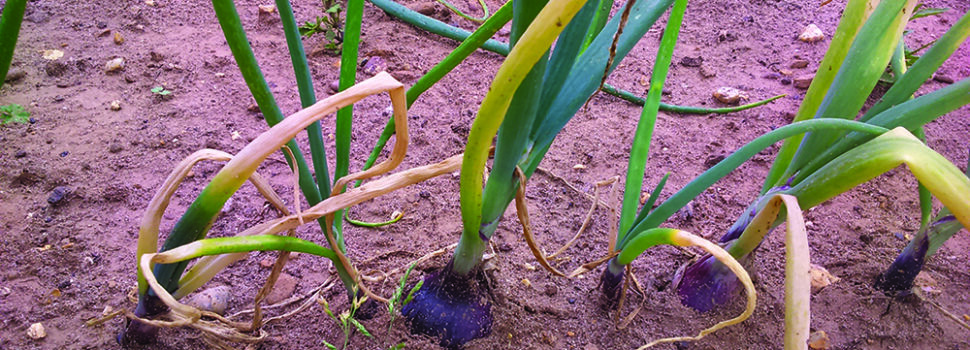
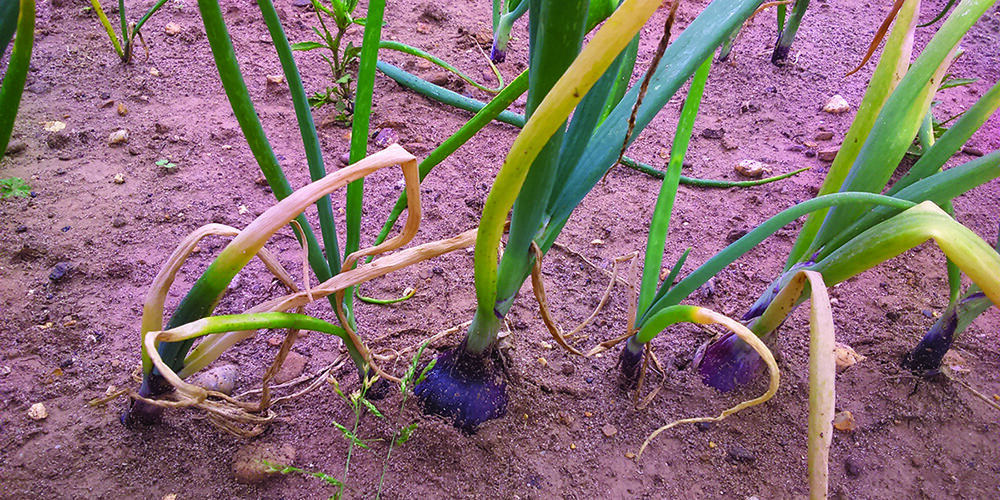
A new DNA-based soil test designed to detect fusarium basal rot before planting has been launched commercially for UK onion growers.
Developed by the University of Warwick’s Crop Centre in partnership with ADAS, the test identifies the soil-borne pathogen which causes the fusarium – offering a potential tool to reduce losses from one of the sector’s most costly diseases.
Fusarium basal rot is estimated to cost the UK onion industry about £10m annually. Researchers say the test could help growers make earlier decisions about field selection and planting risk at a time when there are no effective treatments.
John Clarkson, professor of plant pathologist at Warwick University, said historical detection methods had limited growers’ ability to manage the disease effectively.
“Through a process of enrichment and DNA extraction, we are now able to confirm how prevalent the pathogen is in a given soil sample.”
The test was developed under the two-year Innovate UK and Defra-funded FUSED project and is now available commercially through ADAS. Results are typically returned within 15 days.
Ben Maddison, managing director of ADAS Biotechnology, said: “The results come with a traffic light system to indicate how serious the risk to crop may be and the damage it could do, allowing growers to plan their planting accordingly.”
Ben Collins, chairman of the British Onion Producers’ Association, said the disease had intensified across the sector over the past 15 years.
“We’re pleased this new soil test will help growers make informed decisions on cropping prior to planting and in turn help reduce the financial impact caused by this soil borne disease,” he said.