

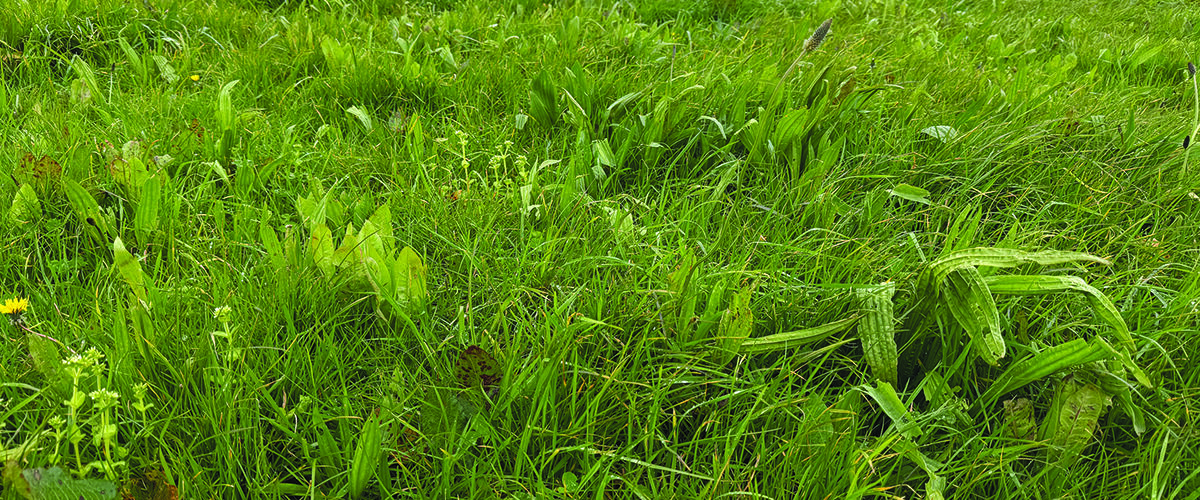
 A farmer-led project is testing a smartphone tool which makes it easier to measure the dry matter yield of herbal leys – helping to boost pasture performance.
The multiple benefits herbal leys bring to productivity, soil health, biodiversity and improved resilience are well recognised, but there are few ways to measure the amount of feed available from them quickly and reliably.
Currently farmers with herbal leys rely on visual estimates. But these are often inaccurate and make it difficult to allocate the required amount grazing and forage area. This in turn affects livestock performance and productivity performance.
“Tools such as plate meters and satellite prediction models are calibrated for ryegrass but don’t perform well on multispecies mixes,” says project facilitator Becky Willson.
“This new tool combines videos taken by farmers in the field with a machine learning model to estimate grass yields and provide information able to improve the use of herbal leys and overall grazing management.”
Funded through Defra’s ADOPT programme, the new system is designed to deliver results in seconds. It doesn’t require any specialist equipment or internet connectivity – making it ideal for everyday use on farm.
Commercial trials
The new system also tells farmers how much grass they are growing within diverse mixes at different time points throughout the season. Commercial-scale testing is taking place across livestock systems.
The data helps build confidence herbal leys can perform well and be integrated into cropping rotations, and by making the most of their forage, farmers can reduce costs and improve profitability.
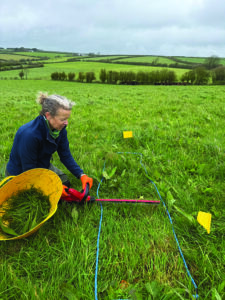
The trial is being carried out across a mix of dairy, beef and sheep farms in England to ensure the tool is robust across different grazing setups and soil types. Researchers started by collecting pasture samples at the beginning of April.
“We have collected more than 500 pasture samples across eight farm sites, with the samples being processed in the lab to determine dry matter content and which can be used to train the model.”
Real conditions
App-based predictions are being compared against traditional cut-and-weigh measurements, to validate the model and refine it for both accuracy and ease of use under real farm conditions.
The ADOPT programme supports farmer-led, on-farm trials addressing real-world challenges to generate practical, scalable solutions for the sector. In this case, the lead farmer is Devon-based Chris Berry.
Results from the project will be shared through on-farm events and industry channels as the work progresses, said Mr Berry.
“The application process was well communicated and straightforward, and by allowing the work to be completed on a variety of farms and land conditions, the results will have a wider reach and be relevant to farmers running a diverse range of systems.”