

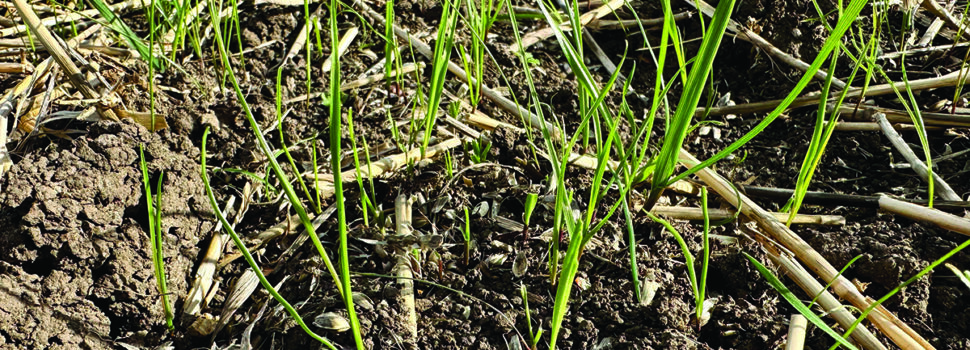
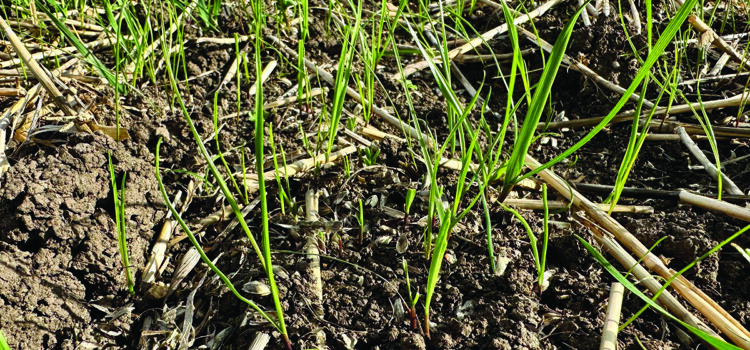
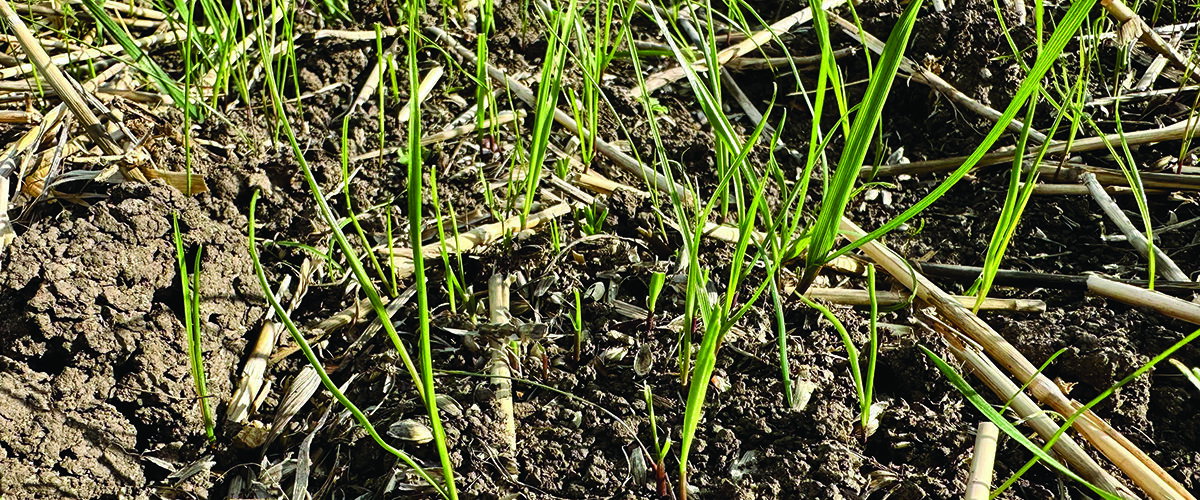
 An unusually early harvest could provide a valuable chance to target blackgrass populations before autumn drilling, as low seed dormancy and a longer cultivation window combine to favour stale seedbeds.
Drought conditions mean freshly shed blackgrass seed is expected to germinate readily once moisture arrives. And with harvest wrapped up weeks ago, several weed flushes could be encouraged before establishing winter cereals. That opportunity could reduce pressure on autumn herbicide programmes – although success will depend on moisture and careful cultivation. Growers are being urged to avoid rushing into drilling simply because harvest finished early.
The extended gap before drilling could prove particularly useful on farms with difficult blackgrass populations, says Mat Hutchings, senior commercial technical manager at crop protection company FMC. “That gives much more opportunity to create one, two or even three stale seedbeds before autumn drilling, depending upon available moisture, helping to reduce blackgrass populations before the crop is established.”
Moisture first
Low dormancy does not guarantee early emergence, says Mr Hutchings. Blackgrass seed still needs moisture to germinate, so dry soils could delay the opportunity to create effective stale seedbeds.
If dry conditions persist after seed shed, seed will not chit regardless of the cultivation system used. That could leave growers waiting several weeks before conditions become suitable. Cultivation and drilling decisions should therefore reflect field conditions rather than the calendar. Further delaying drilling may be worthwhile if it allows rain to trigger a substantial weed flush that can be destroyed before the crop goes in.
Shallow cultivation is likely to be particularly useful this season because it leaves newly shed seed close to the surface, where conditions are more favourable for germination, says Mr Hutchings. “In higher dormancy years, ploughing can sometimes help by burying seed that would otherwise emerge over an extended period. This year, from a blackgrass perspective, it’s generally a season to avoid ploughing for blackgrass.”
Instead, growers encourage as much seed as possible to germinate before drilling – although Mr Hutchings cautions against basing cultivation decisions solely on this summer’s seed. Soil contains blackgrass seed accumulated over several season, he explains. Some could date back three or four years and have very different dormancy characteristics.
“Low dormancy is all well and good for this year, but fields won’t just contain seed shed this summer. They will also hold blackgrass seed from previous seasons, potentially going back three or four years, and that seed may have a wide range of dormancy periods.”
Chemistry timing
Low dormancy could also influence the economics and timing of autumn herbicide programmes. A greater proportion of blackgrass is expected to emerge during the main autumn flush. That makes investment in a strong pre-emergence programme potentially more valuable because more weeds can be targeted at the same growth stage.
“In a lower dormancy season there’s often more value in investing heavily in the pre-em because a larger proportion of the population is emerging together,” said Hutchings. “In higher dormancy years, sequences become more important because emergence is spread over a much longer period.”
FMC trials over the past two seasons found programmes using Fundatis first delivered about a 10% improvement in blackgrass control compared with programmes containing the same chemistry but applying Fundatis later. The product contains bixlozone and beflubutamid, two active ingredients new to the Great Britain market. It can be used pre- and peri-emergence in winter wheat and pre-emergence in winter barley.
FMC says Fundatis can be partnered with cinmethylin for blackgrass control, either in a mixture or sequence. On high-pressure sites, aclonifen, pendimethalin or products based on flufenacet and diflufenican can be added.
Local patterns
Understanding individual weed populations remains important because emergence patterns can vary substantially between farms and fields, says Mr Hutchings. That applies particularly to Italian ryegrass. Some populations emerge predominantly during autumn, while others continue germinating for months and produce a substantial spring flush.
Blackgrass can also adapt to repeated management practices. Farms that have delayed drilling for several years may have selected populations whose peak emergence has shifted towards late October.
That makes field records increasingly important when deciding drilling dates. “The most effective strategy is to understand the emergence pattern on your own farm and tailor drilling accordingly – by either establishing the crop ahead of peak emergence where appropriate or delaying drilling until after the main flush has passed,” says Mr Hutchings.