


 Drought-hit growers waiting for moisture before drilling oilseed rape still have time to get a crop in the ground, says a leading seed breeder.
This year’s exceptionally early harvest left many growers ready to drill – but hot, dry weather has depleted soil moisture. Delaying until conditions improve could still protect establishment without sacrificing yield potential, say experts.
Moisture first
“There needs to be a decent amount of rain to restore moisture levels to where they need to be to sustain a rapidly emerging rape crop,” says Florentina Petrescu, oilseed rape product manager for Limagrain UK Field Seeds. Seed needs sufficient water throughout germination. A small amount of rain can trigger the process, but seedlings can subsequently fail if soils dry out before emergence.
“How often have we seen seed that has started to germinate, only for it to wither away through lack of soil moisture before completing emergence?” says Ms Petrescu.
Growers should therefore make decisions according to seedbed conditions rather than calendar date.
“Holding off doesn’t compromise yield,” says Ms Petrescu. “It is possible to get good yields from later-drilled rape, when it is sown into the right conditions. In fact, later-sown crops can often outperform some of the earlier drilled crops.”
Crops drilled in mid-September in the Lincolnshire Wolds have exceeded 6t/ha, demonstrating the yield potential of later establishment where conditions are suitable, says Ms Petrescu. “Hybrid vigour can also support faster emergence and greater early biomass accumulation. “It is crucial to give the crop the right conditions to establish from the start, because that gives it the best chance of reaching its full yield potential.”
Benefits
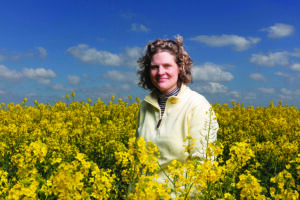
Rutland grower Sarah Bell saw the benefits this season from a 17ha crop of LG Armada established into a firm, moist seedbed last August. The crop followed spring barley and was grown with berseem clover as a companion. It received 30kgN/ha in autumn and 190kgN/ha plus SO3 in two spring applications. Fungicide inputs were minimal during a low disease-pressure season.
“It is a strategic decision to grow oilseed rape, based on a risk-versus-reward calculation,” says Ms Bell, “and this year it has certainly paid off.”
Rainfall from April to June was about 25% below the farm average, but the crop maintained performance through the dry conditions. For growers facing similarly dry seedbeds this August, the message is straightforward: waiting for meaningful rainfall may prove less risky than drilling simply because the traditional sowing date has arrived.