

Growers are being urged to examine how effectively crops use phosphorus before spending money on further applications, as new tools seek to improve returns from fertiliser inputs.
A new Phosphate Stewardship Hub shifts the focus from how much nutrient is applied to how much crops can access. It uses yield, grain analysis and soil information to identify where phosphorus uptake is restricted.
Launched by De Sangosse with support from ADAS, the hub is based on the premise that soil indices alone can provide an incomplete picture. Soils may contain significant phosphorus reserves while crops struggle to obtain enough at critical periods. “It’s not how much phosphorus you apply. It’s how much the crop can access and use,” De Sangosse said.
Harvest clues
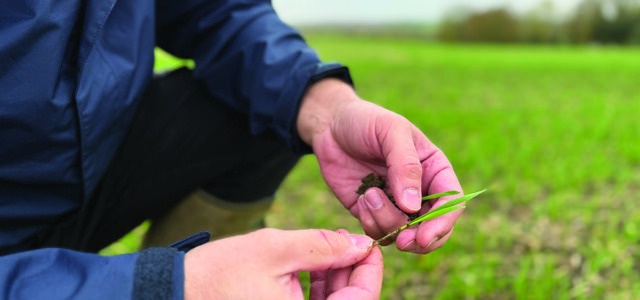
The hub builds on the company’s Phosphate Stewardship Guide, developed with ADAS. It encourages growers to use the harvested crop to assess their existing strategy. Yield and grain analysis can calculate phosphorus offtake. Results can then be compared with soil analysis, rooting, establishment and field observations to identify constraints.
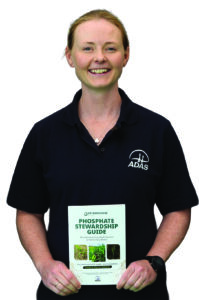 ADAS senior research scientist Christina Baxter said harvest provided a valuable opportunity to assess performance. “The harvested crop is effectively the report card for the season,” she said. “Grain analysis, combined with yield information, can be used to calculate actual phosphorus offtake and provide greater insight into how effectively the crop has captured phosphorus.”
Evidence from the ADAS Yield Enhancement Network has found big variations in grain phosphorus concentrations and crop offtake, including between crops grown at similar soil phosphorus indices. The findings suggest growers should look beyond soil status when deciding how to manage phosphate. The hub divides potential limitations into three areas: crop access to phosphorus, its availability and the utilisation of existing soil reserves.
De Sangosse commercial technical manager Rob Suckling said: “Rather than starting with what to apply, we want growers and agronomists to start by asking what is limiting phosphorus uptake. Once you understand whether the challenge relates to access, availability or utilisation of existing soil reserves, you can make a much more informed decision about what needs to change.”
Options are organised around three principles: Protect, Place and Unlock. Protect aims to maintain the availability of applied phosphate. Place focuses on improving root access to fertiliser, while Unlock seeks to use reserves already held in the soil.
Practical decisions
A new Phosphate Clinic video series accompanies the hub. Dr Baxter and Mr Suckling examine harvest results, poor phosphorus access and ways of diagnosing constraints.
For growers, the commercial argument is about extracting more value from phosphate expenditure rather than simply increasing inputs. Better phosphorus capture could improve nutrient-use efficiency and returns on fertiliser investment. It could also reduce losses from fields, with benefits for water quality.
The hub encourages growers to treat phosphorus management as a cycle. Harvest performance informs diagnosis, which determines whether inputs need protecting, placing differently or whether existing soil reserves can be used more effectively.



Crushed farmer urges rethink on farm safety
News Oct 1, 2026

Drought could last another six months
News Sep 28, 2026

Veteran paddlers launch £10,000 YANA challenge
News Aug 27, 2026


Poignant hi-vis reminder on farm safety
News Jul 31, 2026
