

Small improvements could almost treble profits on a typical arable farm, say experts – highlighting the need to scrutinise all parts of the business.
A 400ha arable enterprise making £16,800 could lift net profit by 166% to £44,600 by raising output by 5% while cutting fixed and variable costs by the same proportion, according to agronomy advisers Hutchinsons.
Based on standard industry costings, the example was presented by Hutchinsons farm consultant Tom Hind at a cultivation event near York. Modest changes can have a disproportionate effect when businesses operate on thin margins, he said.
Margin gains
Growers should examine everything from cultivation strategy and soil management to inputs, machinery and insurance. While individual savings might appear insignificant, their combined effect could improve business performance, he said. “That’s how we can bring profitability into an enterprise where margins are very constrained.”
Finding gains will vary between arable businesses. But Mr Hind said the principle was to question costs rather than assume established practices remained the most efficient option.
“That varies for every business, but the key is to consider every aspect, from the farm management system you use, and cultivation strategy, to soil health, variable inputs, and even your insurance renewal.” He added: “The easiest money to make is the money you don’t spend.”
Cultivations offer one area where savings may be available because unnecessary soil movement adds fuel, labour and wearing-part costs without necessarily improving establishment.
Mr Hind highlighted subsoiling as an example. Depth should be determined by the position of compaction rather than a standard approach across every field, he told listeners at Little Grange Farm, Pocklington.
“What’s the point of subsoiling to 12 inches if the compacted layer is at 6 inches? It won’t fully rectify the issue – and will cost more money in fuel and wearing parts.”
Soil decisions
Hosted by H S Thirsk & Son, around 200 farmers attended the Hutchinsons event, which combined machinery demonstrations with advice on soil health, cultivation strategy and cost management.
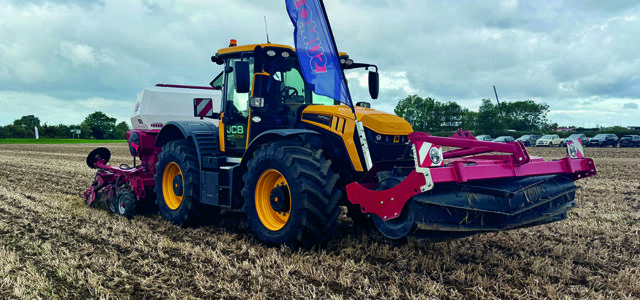
Working plots featured Sumo equipment, including a direct drill, close-coupled toolbar, T-Press high-speed tine press and Multipress tine cultivator. Tractors supplied by Wilfred Scruton Ltd ranged from 140hp to 500hp.
A soil pit also allowed growers to examine the structure of the farm’s sandy clay loam over chalk. The aim was to demonstrate why cultivation decisions should reflect individual soil conditions rather than a predetermined system.
That approach is more important as input costs remain volatile. Agronomist Sam Hugill said stronger wheat prices had improved sentiment among some growers, although higher oil prices threatened to increase fuel and fertiliser bills.
“We all need to continue doing everything we can to ensure that farm businesses remain profitable in what is an increasingly unpredictable economy and climate,” said Mr Hugill.
System risks
Reducing cultivation intensity may appear an obvious response. Mr Hugill said more farmers were considering the zero-tillage option within the Sustainable Farming Incentive as a route to lower costs, improve soils and generate income. But he cautioned against making wholesale changes solely on the basis of headline fuel savings. Soil condition, rotation and weed pressure could determine whether the economics worked in practice.
“Again, it all comes down to understanding your soils, and how they behave, as well as the implications a no-till strategy has for crop rotation and other aspects, such as weed control,” said Mr Hugill. “You might use 50% less fuel under a no-till system compared with the plough, but if crops don’t establish as well because the soil isn’t ready for it, or there are increased grassweed issues that need addressing, those savings could soon be lost.”
The wider lesson is that lower-cost farming does not necessarily mean adopting the least intensive cultivation system. Instead, growers should identify what each field requires – and avoid operations that deliver little value.



Crushed farmer urges rethink on farm safety
News Oct 1, 2026

Drought could last another six months
News Sep 28, 2026

Veteran paddlers launch £10,000 YANA challenge
News Aug 27, 2026


Poignant hi-vis reminder on farm safety
News Jul 31, 2026
