

EXPERT VIEW
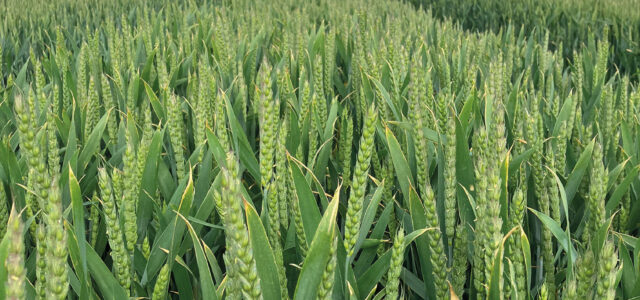
Is game changing wheat Bamford still changing the game? Four experts give their verdicts.
Now in its second year on the Recommended List, Group 3 soft wheat Bamford came through a challenging first full commercial season in 2024.
Bred by Elsoms Seeds, the first year was dominated by serious outbreaks of both septoria and brown rust, as well as tough autumn establishment conditions. So has the variety continued to live up to its hype?
Clare Leaman, NIAB cereals variety specialist
It’s no exaggeration to say that Bamford has revitalised the Group 3 sector and has made the variety decision for many growers who moved over to hard Group 4 feeds a much more difficult one now than in previous years.
To see a Group 3 of Bamford’s overall quality is very welcome, and something we haven’t seen for some time. On agronomics, it has a high, competitive untreated yield –offering a good specific weight and a solid overall disease resistance profile.
Bamford has wide marketability and there were no red flags during a challenging 2024 growing season – so it’s absolutely up there. That said, 2025 is another big year and I think growers will know a lot more by next harvest.
Joe Wood, Wynnstay Group seed manager
Farmers in the west often encounter very different climatic conditions to growers in the east – including higher rainfall that often results in heavy septoria pressure.
Our customers need varieties with solid disease resistance scores supported by a high untreated yield knowing that key sprayer timings may not always be met
With an untreated yield of 90% Bamford ticks that box. And with a treated yield of 107% in the west, it offers a higher potential yield than virtually all the current Group 4 feed wheats.
As most of our customers are mixed farmers high straw yields are critical, and, with many of them rolling their own grain on-farm, a bigger, bolder grain such as Bamford’s is much more desirable than a smaller pinched grain.
Although I recognise and respect Bamford’s wide marketability, most of our customers are growing for feed so the emphasis is on yield and how easy the variety is to manage on fields that are often difficult to travel on.
Wheat varieties grown in the west need to be flexible and straightforward to manage, tiller well and, most importantly, not fall over. Bamford has also fully justified its solid scores on resistance to septoria and brown rust.
Ian Davy, national seed sales manager, Agrii
Bamford achieved an overall treated yield of 110% to controls in Agrii trials across eight regions last year. On untreated yield it achieved 89% across the 8 trials, very much in line with its official RL rating.
With solid agronomics, a wide drilling window and exceptional competitiveness, which enables it to compete against difficult grass weed burdens, it offers growers the triple reassurances of high yield, good quality grain and multiple end markets.
Bamford sold well with high demand coming from virtually every UK region, something which is not always the case. It’s one of our top five best-selling varieties.
Regardless of classification, Bamford is a great winter wheat in its own right and I see no immediate reason for its current popularity to diminish.
David Bouch, head of seed, Hutchinsons
Bamford is delivering yields that are as good – if not better, than all the Group 4 feed wheats, holding its appeal and looking set to gain more area with an increased market share.
It’s arguably one of the best winter wheats on the current RL, regardless of classification, and is still a game changer for first-time growers who have only just begun successfully incorporating it into their rotations last autumn.
It can be grown as either a first or second wheat, performs well on all soil types, and during a very bad year for both septoria and brown rust its disease resistance held up very well from customer reports we’ve received.
It also carries the Pch1 Rendezvous resistance gene, widely recognised to be the best in terms of resistance to eyespot and that should enhance its credentials as a second or even third wheat.
With very few agronomic weaknesses, Bamford was one of only two recommended varieties to match or better its four-year average in 2024.
If anything holds it back, it would only be reluctance from growers to go back to a Group 3 following bad experiences from mediocre varieties prior to Bamford’s arrival.


Plan early to get most out of maize
News Feb 2, 2026

Right balance essential for farming future
News Feb 2, 2026

Better packaging for sugar beet sprays
News Feb 2, 2026

Prepare early for SFI scheme reopening
News Feb 2, 2026

High Court hearing over IHT decision
News Feb 2, 2026
