




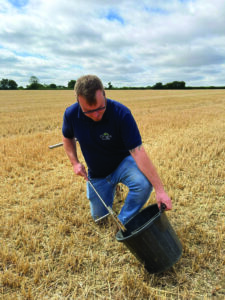
 Savvy growers are taking advantage of stop-start harvest to undertake detailed soil tests ahead of autumn drilling.
The dry spring and hot summer saw many farmers start harvest several weeks earlier than usual. Combines rolled into forward wheat crops in mid-July before rain stopped play towards the end of the month. Although frustrating, catchy weather has meant an opportunity to carry out valuable soil tests and assess soil condition before drilling begins, says Toby Ward, nutrition agronomist at Origin Soil Nutrition.
“Typically, growers would be straight into cultivations and then drilling,” he says. “But the extra time can be spent taking soil samples for analysis and assessing field conditions.”
Extreme weather
Many crops were left parched by a shortage of rain during much of the year – in stark to last season – with growers keen to explore how soils can better withstand increasingly extreme weather.
One way to do this is analysing the various data sources compiled through the season, says Mr Ward, who also recommends visually inspecting fields before coming to any conclusions.
Combine yield data, leaf samples and grain nutrient analysis can all be cross referenced with a broad-spectrum soil nutrient breakdown, he adds. All these databanks can influence nutrition plans next season.
“The following crop’s nutrient requirements and planned inputs should pivot on a detailed and current soil analysis, from this, all the other data sets can be cross refenced.
“Everything comes back to the soil, and growers won’t be making the most of their inputs if this data isn’t available.”
Micros and macros
Micronutrients play an important role in crop performance and small changes can make a big difference. By their nature, micronutrients are typically required in small quantities – but they are no less important than macronutrients.
One nutrient that is proven to boost yield and quality is molybdenum. Trial work undertaken by Origin Soil Nutrition shows increases in yield and nitrogen use efficiency (NUE) by applying molybdenum as a coating to granular nitrogen.
The Micro-Match molybdenum-coated granules were applied to the seedbed, and as a top-dressing during the season. There were compared to a seedbed NPKS and nitrogen/sulphur top dressing.
Key findings from the spring barley trial highlighted an increased yield of 3.5% over the standard application and a rise in NUE of 8.9%. A return on investment of 6:1 showed that any additional outlay for the molybdenum-coated fertiliser was returned in increased yield.
“By applying molybdenum as a coating rather than individual granules, the number of landing sites are increased, providing greater availability to the crop and the soil bacteria,” says Mr Ward.
Plan ahead
Electrostatic powder applied in the blending plant helps to ensure micronutrients are evenly distributed. Molybdenum kick starts the nitrification process, making it easier for roots to take up nitrogen from the soil.
“This year’s dry spring highlighted that having fertiliser on the farm ahead of when it was required proved hugely beneficial. Ordering ahead of time and having space to store bags undercover will ease logistics when the nutrients are needed.”
Using granular nutrition means growers can stock up with the season’s requirements and choose innovative methods, such as Micro-Match, to apply micronutrients alongside macro nutrients in the same bag.
“The timing of fertiliser applications is essential for new crops, so using a trusted supplier to ensure bags are on farm, and ready to be spread, should allay concerns over product supply.”