

Attention to detail when applying glyphosate before drilling will help ensure successful cereal establishment this autumn.
“Appropriate timing, dose and application quality have a significant impact on weed problems in the crop,” says Bayer agronomist Roger Bradbury.
A Bayer demonstration at NIAB’s blackgrass management site in Lincolnshire shows the importance of the pre-drilling programme. Blackgrass numbers rapidly escalated over two seasons with poor glyphosate use.
In the demonstration, poor application practice saw 1.5 litres/ha of a 360g/litre glyphosate product applied one fortnight before drilling. Good practice to would have been 3.0 litres/ha of a 360g/litre product within a week of drilling.
Management
The demonstration also examined the interaction between good and poor weed management strategy in relation to drilling date, crop rotation and selective herbicide use, says Mr Bradbury.
“Poor management choices can quickly cause a huge increase in weed populations. Effective use of Roundup pre-drilling had a huge impact on overall weed numbers irrespective of the weed management strategy. Clearly the aim is for good practice across the board, but the results of the demo show that applying Roundup properly at the correct rate and timing pays dividends.”
“Best practice use on farm also helps minimise the risk of selecting for reduced sensitivity and potential resistance development on your farm.”
Maximum efficacy
When targeting small grass weeds before drilling, 540g/ha of active ingredient –equivalent to 1.5 litres/ha of a 360g/litre product – is suitable for black grass seedlings only. But Italian ryegrass and brome need 720g/ha as a minimum starting point. Larger tillering weeds will need higher rates still.
“Assess the situation carefully to avoid under-dosing,” says Mr Bradbury. “Don’t try to compensate for a lower rate by adding mix partners of adjuvants.”
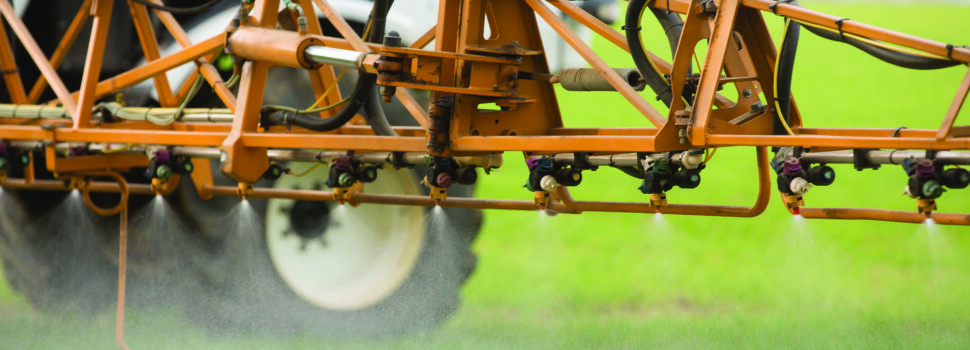
Application and formulation both play a part in getting glyphosate where it needs to be – the growing shoots and roots of the plant. Boom height should be 0.5m above the target and forward speed should be no more than 12km/hour for even application.
Reliability
Using Roundup branded glyphosate helps ensure more reliable efficacy, says Mr Bradbury. That’s because Roundup uses glyphosate in the potassium salt (K-salt) form which is a smaller molecule than the IPA-salt of many other products.
“This means there is more capacity to include surfactants in the formulation to improve performance. It also improves speed of activity, rain fastness and reduces cultivation intervals.” Glyphosate efficacy and stewardship is more important than ever following the announcement of resistance earlier this year. Mr Bradbury encourages farmers and agronomists to take note of guidelines when using glyphosate pre-drilling.
“Use a maximum of two applications in total, with cultivation or another form of weed control in between to eliminate survivors. Don’t make repeat applications to the same weeds and investigate any instances of poor control.”
Green bridge
Growers should also remember that aphid vectors of barley yellow dwarf virus (BYDV) survive in cereal volunteers. Spraying off any volunteers is an important first line of defence against BYDV. Unlike weed control, however, a longer gap between spray off and drilling prevents a green bridge where aphids can survive until the crop is drilled. In Bayer trials a ten-day gap was better than a two-day gap for preventing BYDV yield losses.
“For weed control, the optimum is a week or less so it’s a balancing act and a lot depends on whether weeds or BYDV are a bigger threat in a particular field. There are more resistant varieties now which can help manage the risk.”