

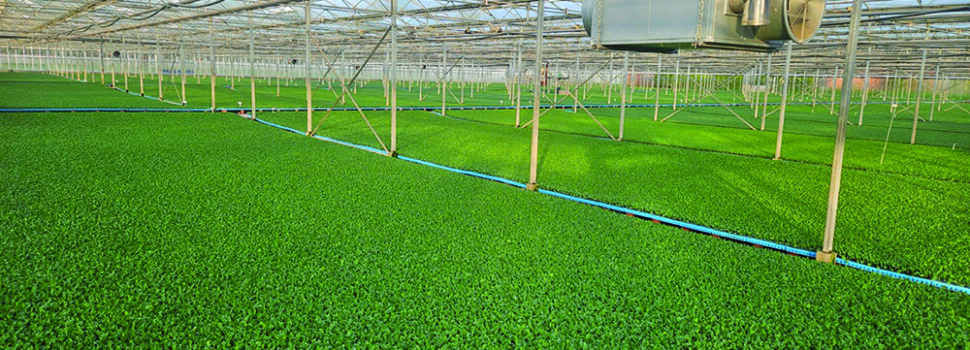
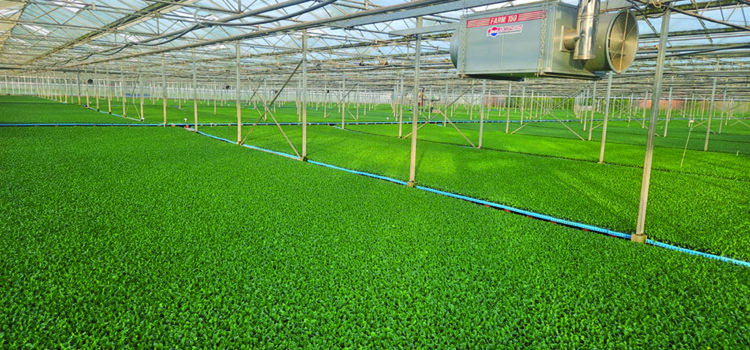
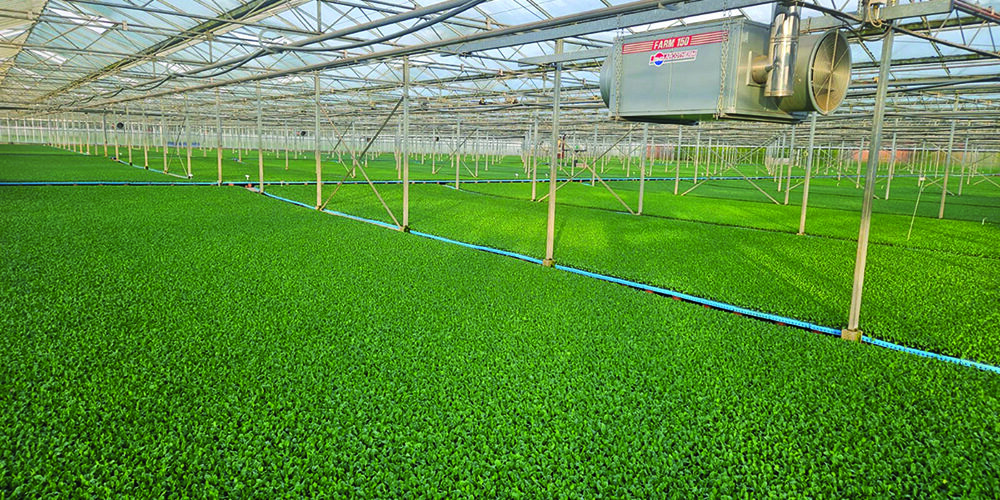
Pro-active pest management is helping a Lincolnshire nursery produce consistently healthy vegetable plants which yield uniform crops for customers.
Based at Fishtoft, near Boston, Lion Plants was established by John and Ann Woods, in the mid-1960s. Managed today by their son John, it produces about 100 million brassica transplant modules annually under 2.5ha of glass.
“Our job gets harder every year,” says Mr Woods. “We live in a completely different world now to when my parents started out, both structurally and economically. After Brexit, Covid and all the other major events that have happened over the last few years, everything has changed – from the labour we employ to the growing medium we use.”
Quality crops
Add in the more extremes in weather, and right now it seems that the industry is under attack from all angles, adds Mr Woods. “Quality and uniformity have been paramount ever since we started producing ‘modules’ for others to grow on.
“But as our customers have invested in automated planters, the plants which we supply have had to become more compatible and uniform for the machines to operate successfully.”
Mr Woods explains that achieving this uniformity depends on using precise, consistent growing techniques, including boom irrigation to apply water, nutrients and products to control pests and diseases.
“Cabbage root fly, aphids, caterpillars and other pests can severely damage brassica crops, resulting in replanting costs, along with patchy and rejected crops.
Pest control
“Although these issues do not affect us directly, the products we apply for post-planting pest control are an insurance policy for our customers.”
Mr Woods says that his customers are free to choose the product he applies prior to plants leaving the nursery. What they choose could be down to personal preference, what their agronomist advises, or because the land is double-cropped.
A popular option is Verimark, from FMC UK, to control cabbage root fly. A suspension concentrate containing 200/l cyantraniliprole – primarily controls cabbage root fly while tackling aphids and caterpillars, without harming beneficial insects.
“When we first used Verimark in 2016, a very experienced agronomist described it to me as the most exciting product to come into the brassica industry. This chemistry was a huge deal then, so a decade later it is even more important.”
Precise planning
“There is a common misconception that because our business is based under glass and therefore not directly exposed to the elements, that conditions are consistent from year to year, but that is not the case.
“For example, in 2024 we had the wettest start to a year ever and plants were going out four to six weeks late because our customers could not get on the land, creating space issues for our following crops.
Customers provide Mr Woods with their planting programme a season ahead to enable the nursery to plan their planting schedule, which has to be extremely precise. “It’s up to us to work back from there to meet their specific requirements.”
Customer needs
Weather permitting and crop dependent, some customers want to start planting out by the end of February or early March. To meet those dates, Lion Plants seeds over-wintered crops from the end of September.
“We will apply our root drenches through our automated boom system just prior to plants starting to leave the glass. By timing the application just prior to planting it allows the grower to get the most out of the control. If we apply it too soon the period of activity in the field will be reduced. And with the margins on fresh vegetables being so tight now, even a small percentage gain makes a massive difference to profitability.”