

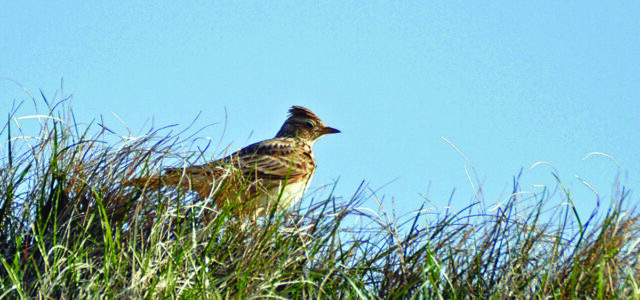
 Farms providing supplementary feeding are supporting higher numbers of many important farmland bird species.
Run by the Game & Wildlife Conservation Trust (GWCT) and sponsored by the NFU, the annual Big Farmland Bird Count encourages farmers and land managers to record the bird species and numbers on their farms every February.
Submissions
Despite poor weather this spring, more than 1,200 submissions were received for the 2026 survey, with the most counts submitted from Suffolk, Norfolk, and Lincolnshire.
Some 275,024 birds were counted over 292,828ha of farmland. Some 67% of farms surveyed were in an agri-environment scheme, with 64% providing supplementary feeding for birds on their farm.
In total, more than 69,000 red-listed birds were counted. They included 34 different species, with the most abundant of those being starling (25,306), lapwing (19,198), and fieldfare (15,816).
Many rare species were found in large winter numbers on farmland – despite severe long-term declines shown by the British Trust for Ornithology, said GWCT science communicator Jayna Connelly.
“This suggests that well managed farmland, with supplementary feeding and improved habitat features, helps provide important winter refuge and food when it is scarce elsewhere.



Crushed farmer urges rethink on farm safety
News Oct 1, 2026

Drought could last another six months
News Sep 28, 2026

Veteran paddlers launch £10,000 YANA challenge
News Aug 27, 2026


Poignant hi-vis reminder on farm safety
News Jul 31, 2026
