

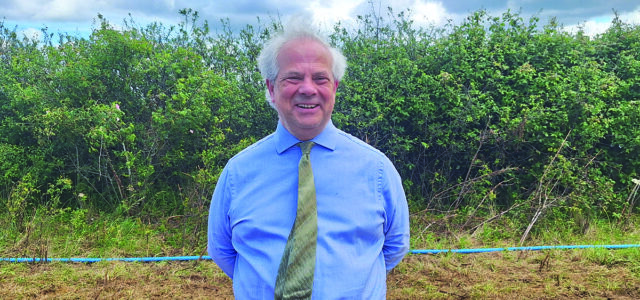
 Tight cereal margins represent an opportunity – not just a risk – for growers prepared to adapt, farmers have been told.
A focus on farm management, productivity and long-term planning will be vital for many arable businesses to remain profitable, according to the Central Association of Agricultural Valuers (CAAV).
Growers face a decisive period as rising costs, weak grain prices and policy uncertainty force businesses to rethink how they operate, CAAV secretary and adviser Jeremy Moody told listeners at Cereals 2026.
Cost Pressures
Geopolitical tensions were adding further uncertainty to an already difficult outlook, he said. Input costs were rising before the Middle East conflict and had since increased further, while cereal prices remained subdued.
“The longer the Strait of Hormuz is closed, the shorter we will be of fuel, fertiliser and other inputs, with consequences for costs,” warned Mr Moody.
The UK-EU reset – which is likely to see closer alignment between UK and EU rules and regulations – could also affect access to plant protection products and create further uncertainty around exports.
“On standard costings, winter wheat is losing money – the real gamble is where grain prices will be next summer. My suspicion is that not all land will be worth that gamble – some is already being withdrawn from production.”
Strategic Change
Without basic payments, many growers are likely to reassess rotations this autumn, focusing on crops that improve soil health, withstand extreme weather and require fewer inputs.
Management would become increasingly important, said Mr Moody, citing Andersons Centre figures suggesting that 95% of the difference between top-performing farm businesses and the rest is management.
“In the UK, farming makes up 0.6% of Gross Domestic Product – in Holland it’s 1.6%. They don’t have much agricultural policy, but they do have a national policy of being pro-business.”
Mr Moody urged policymakers to support growth through improved investment allowances, tax incentives and planning reforms. “We should set a target for farming to grow to 1% of GDP – and mean it,” he said. “We need to use the language of success – and celebrate good and efficient farming as a value in its own right. And remember that the government can help as well as hinder.”



Poignant hi-vis reminder on farm safety
News Jul 31, 2026


Royal recognition for farmer’s open days
News Jul 2, 2026

Supplementary feeding boosts bird numbers
News Jul 2, 2026

Check records before applying for SFI 2026
News Jul 2, 2026