

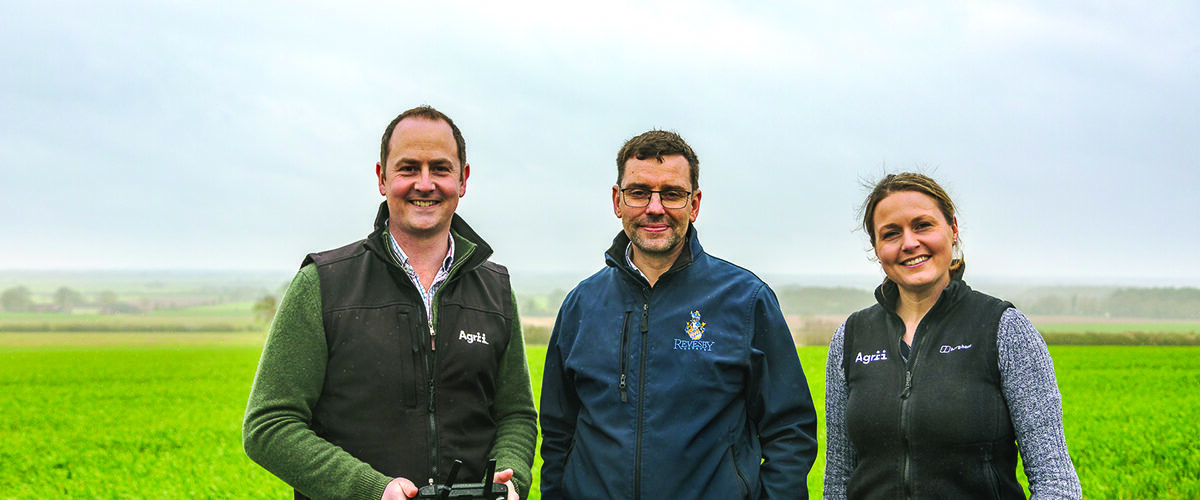
 Digital agronomy tools including AI-powered disease sensors have increased gross margins by almost £138/ha in winter wheat.
Agrii trials at the Revesby Estate in Lincolnshire compared the farm’s conventional agronomy programme against a technology-led system using drone imagery, satellite mapping, disease forecasting and variable-rate applications.
The aim was to grow a 10t/ha crop of LG Redwald feed wheat at 9 per cent protein on a medium soil; and an 8.5t/ha crop at the same protein on lighter soil – both targets based on trials undertaken the previous year.
Technology-led
Agrii said the technology-led wheat crop yielded 0.82t/ha more than the farm standard. This was on top of reduced fertiliser spending and higher output which delivered an extra gross margin of £137.63/ha.
“The technology-led side of the field spent 15% less on nitrogen than the farm strategy,” says Agrii technology trials manager Jonathan Trotter. On the sandy part of the field, this dropped to 40 per cent. Overall, this was a £30/ha saving on nitrogen.”
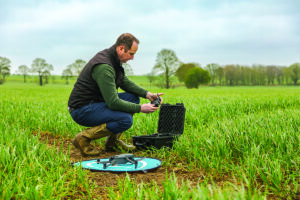
Mr Trotter used RHIZA soil sampling to create comparable zones before building a programme around Skippy Scout drone analysis, satellite imagery from the Contour platform and variable-rate nitrogen applications. Drone analysis was used to create a crop-specific green area index (GAI), measuring points across all the different soil zones. The Contour platform was then used to produce a nitrogen application map for each timing.
Revesby Estate farmer manager, Peter Cartwright says the benefits of variable-rate nitrogen were a key lesson learned from the trials so far – especially when it comes to the second spring application.
“We started looking more at our nutrient use efficiency and the savings we can make,” he explains. It’s about paying more attention to what the maps are telling us in Contour, and the variable rate application after that.”
Cautious adoption
Fungicide decisions were shaped by disease forecasting software and a BioScout smart spore trap. It captures airborne fungal spores before using a microscope and artificial intelligence to identify disease threats automatically.
“We knew the variety was LG Redwald, which gave us an understanding of what the disease pressure might be,” said Lucy Cottingham, Agrii’s digital agronomy development manager. “One of the learnings from the dry season last year was that we didn’t necessarily get the benefit of pushing late green leaf area retention because the crop droughted by the time you would expect to see the benefit.”
Mr Cartwright is now using Contour more widely across day-to-day operations, while testing more emerging technologies. He believes autonomous drone systems scanning crops without could now be used by other large estates.
Technology has an increasing role – but physical crop-walking remains vital. “At the moment, I don’t want to risk my whole farm area because a piece of technology is telling us not to do anything because there’s no disease.”